
Hear from Our Customers
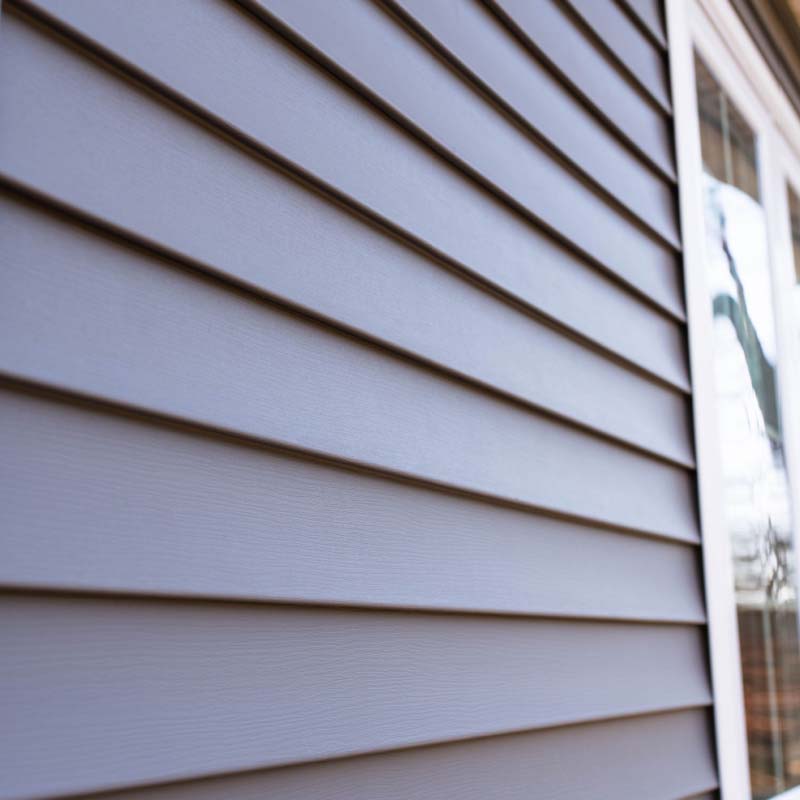
Your siding takes the brunt of everything Long Island throws at it. Salt air from the coast, nor’easters that rip through every winter, UV rays that fade and crack older materials. When it fails, you’re looking at drafty rooms, spiking energy bills, and water damage that only gets worse.
Good siding changes that. You stop worrying every time a storm rolls in. Your heating and cooling costs drop because insulated vinyl or fiber cement actually keeps conditioned air inside. Rooms feel comfortable year-round instead of freezing in January and sweltering in August.
You’re not repainting every few years or patching sections after every heavy rain. Modern siding handles moisture, resists impact, and holds its color without constant upkeep. That’s time back in your schedule and money staying in your account.
And when you eventually sell? Homes in Calverton with quality siding move faster and command higher prices. Buyers see a house that’s protected, efficient, and ready to go.
We’ve handled exterior projects across Calverton and Suffolk County for years. We’re not a national franchise or a crew that shows up once and disappears. This is a family operation, and we’re here before, during, and after your installation.
We know what coastal weather does to homes in this area. We’ve replaced siding damaged by nor’easters, fixed moisture problems from salt air exposure, and upgraded homes that were bleeding energy through gaps and cracks. That experience means we catch issues other contractors miss and recommend materials that actually last here.
You’ll work with licensed professionals who pull the right permits, follow local building codes, and use materials backed by real warranties. No shortcuts, no surprises halfway through the job.
First, we come out to look at your house. We’re checking for damage you can see and problems you can’t—moisture behind panels, failing flashing, structural issues that need fixing before new siding goes up. You’ll get a clear breakdown of what needs to happen and what it costs. No vague estimates.
Once you’re ready to move forward, we handle permits and order materials. For most Calverton homes, that means vinyl or fiber cement designed to handle humidity, salt exposure, and temperature swings. We remove old siding carefully, inspect and repair sheathing if needed, then install new panels with proper moisture barriers and ventilation.
The install itself usually takes a few days to a week, depending on your home’s size and any repairs we uncover. We clean up daily and do a final walkthrough with you before we’re done. You should know exactly what was done, what to expect from your new siding, and how to reach us if anything comes up later.

Ready to get started?
You’re getting full removal of old siding, inspection and repair of underlying structure, and professional installation of your chosen material. That includes moisture barriers, proper flashing around windows and doors, and ventilation that prevents trapped moisture and heat buildup.
In Calverton, most homeowners choose between insulated vinyl and fiber cement. Insulated vinyl bumps your wall’s R-value from around 0.61 to between 2.0 and 4.0, which translates to real savings on heating and cooling. It also dampens road noise and resists impact better than standard vinyl. Fiber cement offers the highest ROI—typically 80-89% nationally, often higher on Long Island—and it’s nearly indestructible in coastal conditions.
We use materials from manufacturers like Royal Building Products, which backs their vinyl with a Double Limited Lifetime Warranty. That’s coverage you can actually use if something goes wrong, not fine-print protection that disappears when you need it.
Every project includes cleanup, a final inspection, and documentation of what was done. You’ll have warranty information, care instructions, and a direct line to reach us if questions come up down the road.

For a standard three-bedroom house in Calverton, you’re looking at $10,000 to $24,000 for vinyl siding, $14,000 to $28,000 for fiber cement, or $18,000 to $32,000 for wood. That includes removal of old siding and full installation with moisture barriers and flashing.
The range depends on your home’s size, the condition of what’s underneath, and which material you choose. Insulated vinyl costs more upfront than standard vinyl but pays back through lower energy bills. Fiber cement costs more than vinyl but offers better ROI when you sell and requires almost no maintenance.
We give you an exact price after we see your house. No ballpark guesses, no “starting at” numbers that double once work begins. You’ll know what you’re paying before we start.
Insulated vinyl and fiber cement both handle Long Island’s weather well, but for different reasons. Insulated vinyl resists moisture, doesn’t rot or warp, and the foam backing helps with energy efficiency and impact resistance. It’s a solid choice if you want low maintenance and better insulation without breaking the budget.
Fiber cement is tougher. It doesn’t care about salt air, won’t crack from temperature swings, and holds paint longer than wood without the rot issues. It’s heavier and costs more to install, but it’s the most durable option for coastal exposure and typically delivers the highest ROI.
Wood siding looks great but requires constant maintenance in this climate. Salt air and humidity will destroy it without regular sealing and repainting. Most Calverton homeowners skip wood unless they’re restoring a historic property and willing to commit to the upkeep.
If you’re patching the same spots after every storm, that’s a sign the whole system is failing. Same if you’re seeing widespread fading, cracks in multiple areas, or panels that won’t sit flat anymore. Once siding starts moving or gaps appear, water and pests get in fast.
Check for moisture damage inside your house—bubbling paint, peeling wallpaper, or soft spots on interior walls near exterior ones. That means water is getting through. Also look for mold or mildew on the siding itself, especially on north-facing walls that don’t get much sun. That’s trapped moisture, and it’s not going away with a patch job.
Energy bills spiking without explanation is another red flag. Gaps in old siding let conditioned air escape, so your HVAC works harder and costs more. If rooms along exterior walls feel drafty in winter or hot in summer despite running your system, your siding probably isn’t doing its job anymore.
Insulated siding makes a measurable difference. Standard vinyl has an R-value around 0.61. Insulated vinyl bumps that to between 2.0 and 4.0, depending on the product. That reduces heat transfer through your walls, which means your furnace and AC don’t have to work as hard to maintain temperature.
Homeowners with insulated siding consistently report lower heating costs in winter and reduced cooling costs in summer. The exact savings depend on your home’s size, how well your attic is insulated, and how old your HVAC system is, but it’s not uncommon to see 10-20% reductions in energy use.
The other benefit is comfort. Insulated siding evens out temperature swings, so rooms don’t feel freezing one hour and overheated the next. That matters in Calverton, where winter temps can drop into the teens and summer humidity makes everything feel hotter than it is.
Most residential siding jobs take three to seven days, depending on your home’s size and what we find when we remove the old siding. A straightforward replacement on a ranch-style house might wrap up in three or four days. A larger two-story home with complex trim work could take a full week.
Delays happen if we uncover structural issues—rotted sheathing, water damage, or failing house wrap. We’re not moving forward until those problems are fixed, because new siding over bad structure just hides the issue temporarily. You’ll know right away if we find something, and we’ll give you an updated timeline before proceeding.
Weather also plays a role. We’re not installing siding in heavy rain or freezing temperatures because moisture and adhesion issues can compromise the job. If we have to pause for weather, we’ll make sure your house is protected and pick back up as soon as conditions allow.
Yes, and we handle that. Suffolk County requires permits for siding replacement to ensure work meets building codes and safety standards. The permit process covers structural integrity, fire resistance, and proper installation methods.
Skipping permits is a bad idea. If you sell your house later, unpermitted work can kill a deal or force you to rip everything out and redo it properly. It also voids most manufacturer warranties and leaves you with no recourse if something goes wrong.
We pull permits, schedule inspections, and make sure everything passes before we consider the job complete. That’s part of working with a licensed contractor instead of a handyman or an out-of-state crew that disappears after they cash your check. You get documentation that the work was done right and approved by the county.
Other Services we provide in Calverton