
Hear from Our Customers
Water flows where it should. Away from your foundation, away from your basement, away from the wood holding up your roofline.
You stop worrying about that corner that overflows every time it rains. You stop seeing water pooling at your foundation after storms. The fascia board behind your gutter stops rotting out because water’s finally draining instead of sitting.
Most gutter problems start small—a leak at a seam, a section pulling away from the house, a downspout that’s clogged or disconnected. Left alone in Sag Harbor’s wet climate, those small problems turn into fascia damage, foundation cracks, and basement water. Fixing gutters early means you’re not paying for foundation repair later, which runs anywhere from $4,500 to $13,000 around here.
When gutters do their job, your home stays dry. That’s what you’re paying for.
SkyLuxe Construction is a family business. We live in Suffolk County, we work in Suffolk County, and we’ve seen what happens to gutters when salt air and nor’easters hit year after year.
We know the difference between a quick patch and a real repair. We know which sealants hold up in coastal humidity and which ones fail in six months. We know that most gutter leaks aren’t actually coming from where you see the drip—they’re coming from failed flashing, separated seams, or fascia damage you can’t see from the ground.
When you call, you’re talking to someone who drives the same roads and deals with the same weather you do. We show up when we say we will, and we fix the actual problem, not just the symptom.
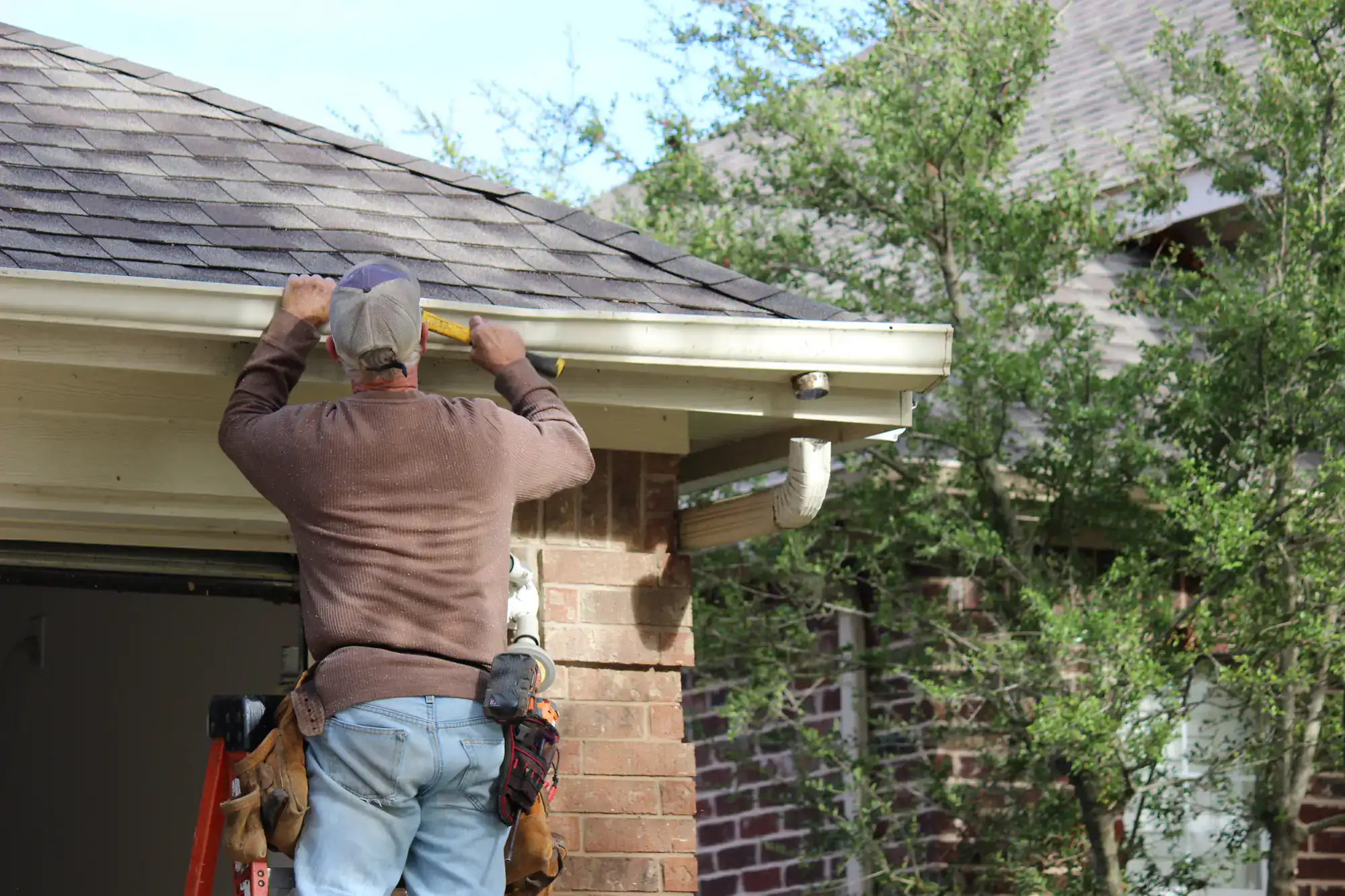
First, we climb up and look. Most leaks aren’t where you think they are. We check seams, flashing, fascia boards, downspouts, and how water’s actually flowing through the system.
Then we tell you what’s wrong and what it’ll cost to fix it. If your fascia board is rotted, we’re not just rehanging the gutter on bad wood—that’s a waste of your money. We replace what needs replacing and repair what doesn’t.
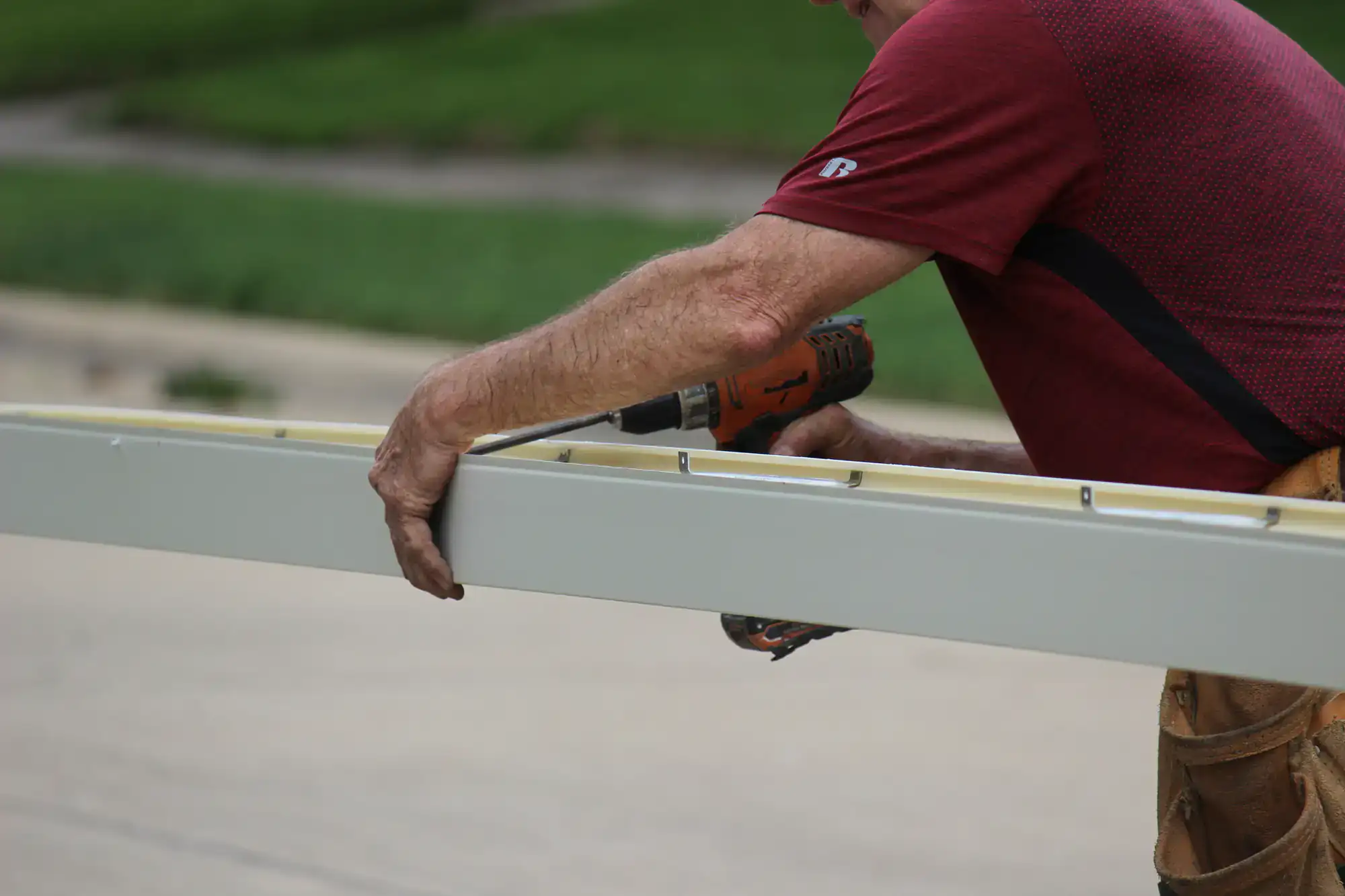
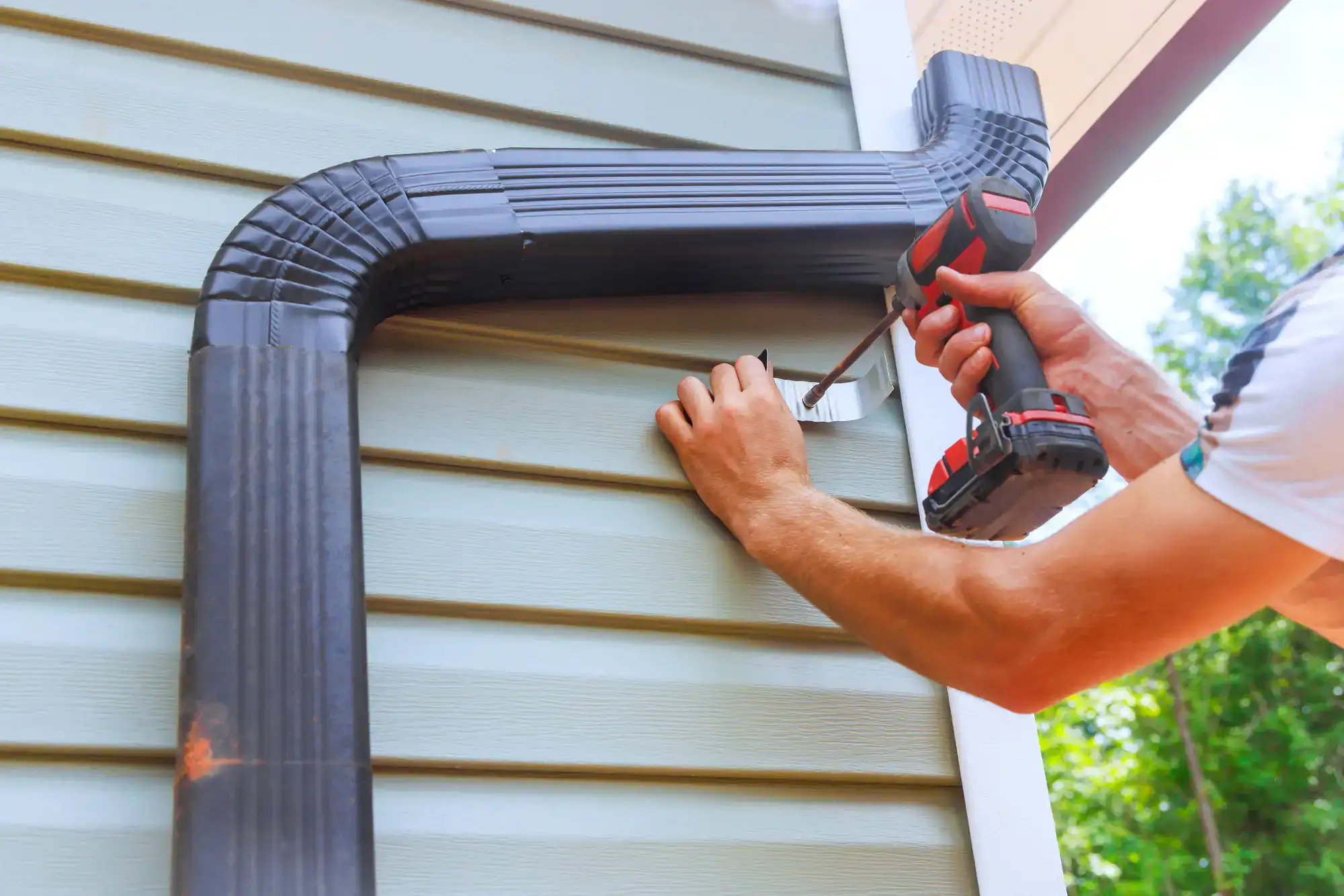
The actual repair depends on what’s failing. Leaking seams get resealed with marine-grade sealant. Sagging sections get rehung with proper spacing and new hardware. Holes get patched or that section gets replaced. If the downspout’s dumping water at your foundation, we extend it or add proper drainage.
Once it’s fixed, we test it. We want to see water flowing through the system the way it should before we leave. You’re not paying us to come back in three months because the repair didn’t hold.
Ready to get started?
Every gutter repair includes a full inspection of your system. We’re looking at seams, joints, flashing, fascia condition, downspout flow, and whether your gutters are pitched correctly. If there’s damage we can see, we tell you about it.
The repair itself covers whatever’s failing—sealing leaking joints, reattaching sagging sections, patching holes, replacing damaged downspouts, or fixing gutter corners that overflow. We use corrosion-resistant fasteners and marine-grade sealants because we’re right on the coast. Standard hardware rusts out fast here.
Sag Harbor gets about 112 days of rain each year, and when storms roll through, your gutters take a beating. We see a lot of storm damage gutter repair after nor’easters—sections ripped loose, downspouts bent or disconnected, seams blown open. If your fascia board is damaged, we handle that too. There’s no point rehanging a gutter on rotted wood.
If you’ve got an emergency—active leak, water pouring into your house, storm damage that needs immediate attention—we can tarp or temporarily divert water until we can make a permanent fix. We keep supplies stocked for exactly that reason.
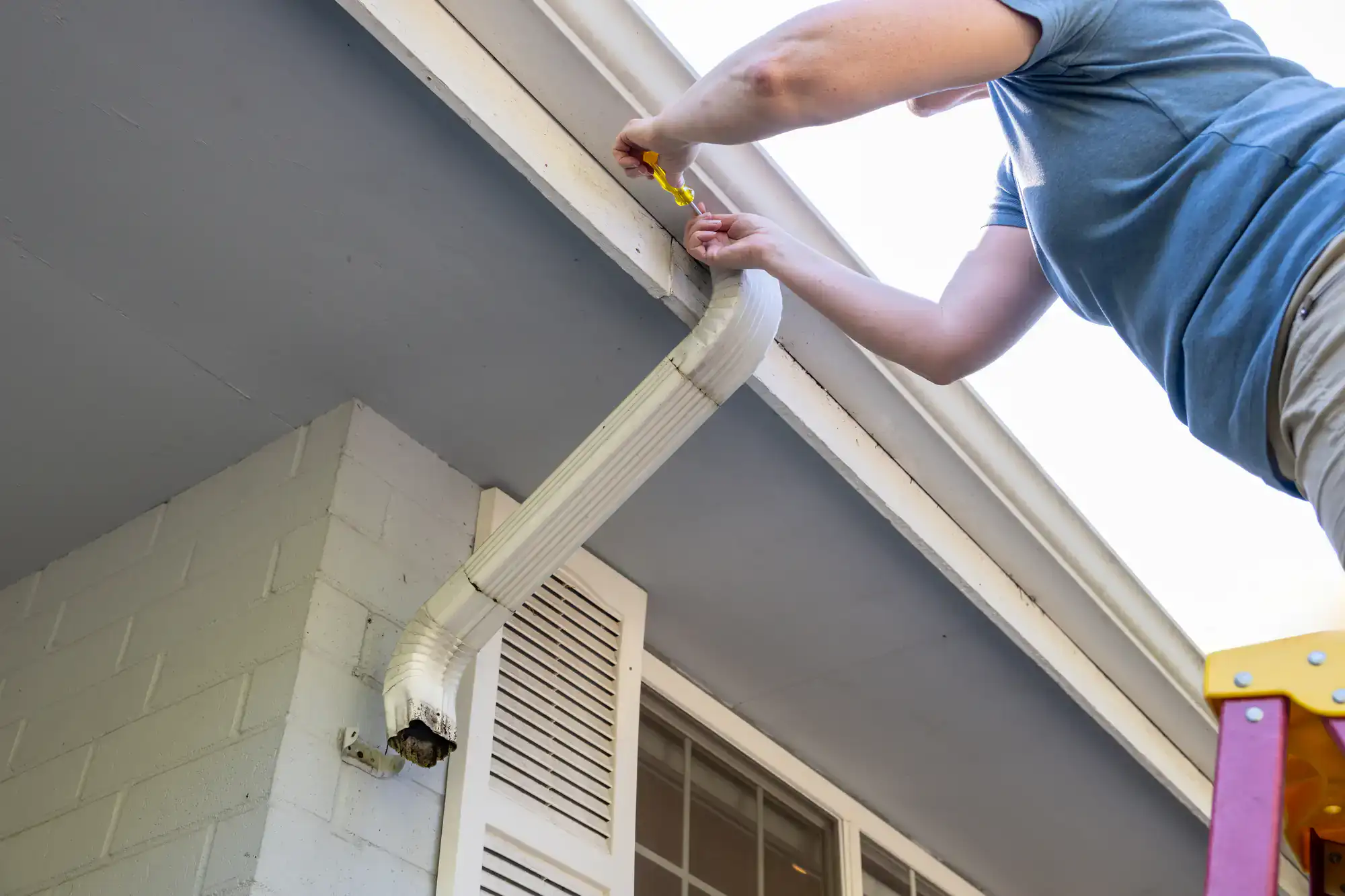
Most gutter repairs in Sag Harbor run between $75 and $625, with the average around $385. That’s for common issues like sealing a leaking seam, reattaching a sagging section, or patching a small hole.
If you need fascia board replacement or extensive storm damage repair, the cost goes up. Fascia work adds material and labor because we’re dealing with structural wood, not just the gutter itself. But compare that to foundation repair, which starts around $4,500 and can hit $13,000. Fixing your gutters now is a lot cheaper than fixing your foundation later.
We give you a clear estimate before we start. No surprises, no hidden costs. You’ll know what the repair involves and what it costs before anyone picks up a tool.
Corners and seams leak because the sealant fails. Gutters expand and contract with temperature changes, and over time that movement breaks down the seal. Add in coastal humidity and salt air, and sealants degrade even faster here than they do inland.
The other common cause is standing water. If your gutter isn’t pitched correctly, water sits in sections instead of draining. That constant moisture eats through sealant and eventually starts corroding the metal itself. We see this a lot after leaf buildup—debris blocks flow, water pools, seams start leaking.
Fixing a leaking seam means cleaning out the old sealant, making sure the joint is dry, and resealing it with a product that’s actually rated for exterior coastal use. If the metal around the seam is corroded, we may need to replace that section entirely. A good seal should last years, not months.
Yes, most of the time. Gutters sag because the hangers fail or the fascia board they’re attached to is damaged. If the gutter itself is still in good shape, we reattach it with new hardware and proper spacing.
The key is checking the fascia. If that board is rotted or water-damaged, rehanging the gutter won’t solve anything—it’ll just sag again in a few months. We replace damaged fascia first, then rehang the gutter so it’s pitched correctly toward the downspout.
Sometimes a sagging gutter means the system was installed wrong in the first place—hangers spaced too far apart, incorrect pitch, or cheap hardware that couldn’t handle the weight of water and debris. When we fix it, we do it right. Proper hanger spacing, corrosion-resistant fasteners, and a pitch that actually moves water.
If water’s running down your siding or dripping behind the gutter, that’s a leak. If it’s spilling over the front edge, that’s overflow—usually from a clog or improper pitch.
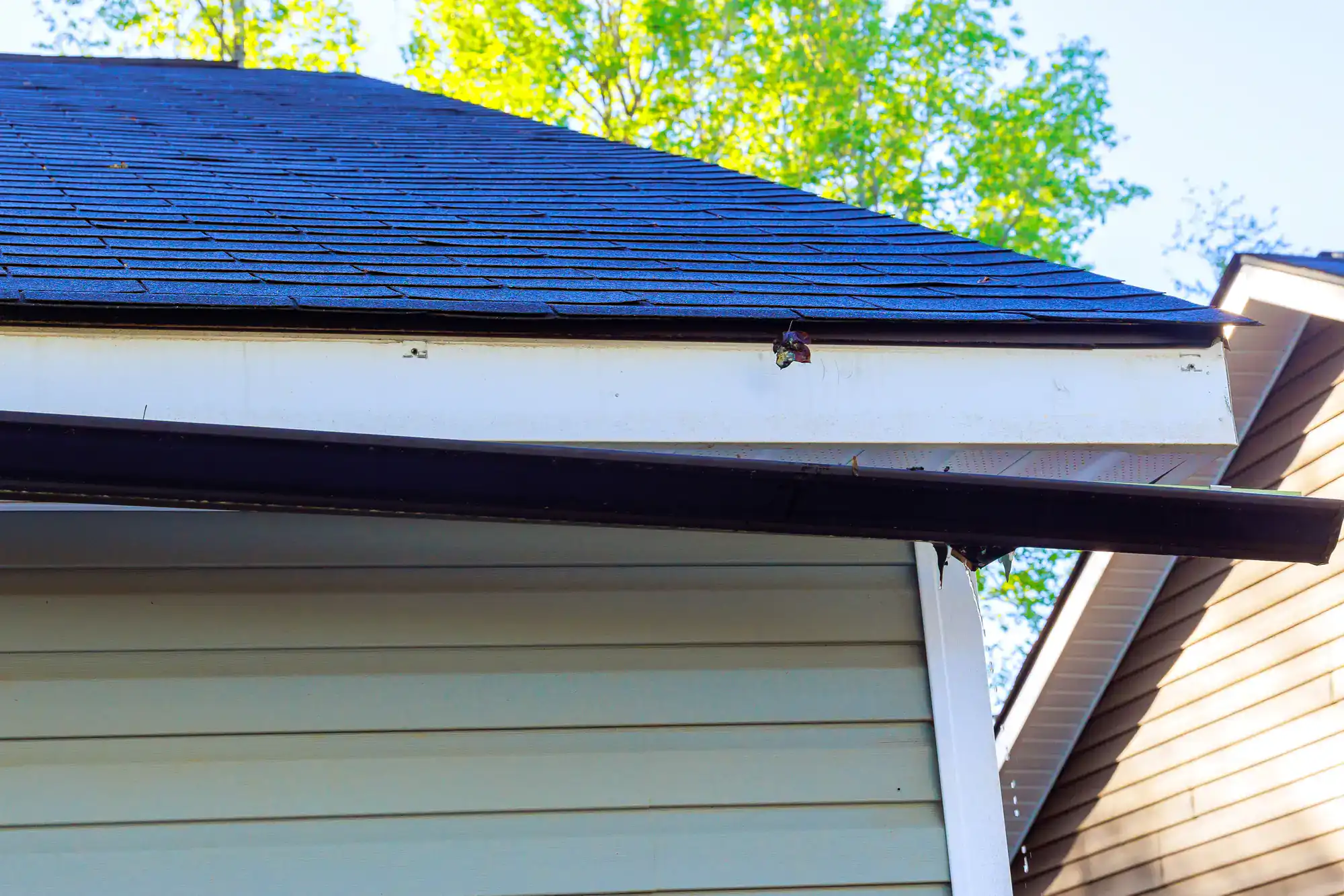
Leaks typically happen at seams, corners, or where the gutter meets the fascia. You’ll see water stains on the fascia board, peeling paint near the roofline, or actual dripping from behind the gutter. That water’s getting between the gutter and your house, which means it’s soaking into wood and potentially getting into your walls.
Overflow is easier to spot—water pours over the front during rain, often in one specific section. That usually means a clog in the downspout or a low spot where water’s pooling instead of draining. Both problems need fixing, but a leak is more urgent because it’s actively damaging your home’s structure.
Yes. When a storm rips a section loose or a downspout gets torn off, water starts pouring straight down your foundation. That’s not something you wait on.
We keep emergency supplies stocked specifically for storm damage. If you’ve got a section hanging, a major leak, or a downspout that’s completely failed, we can get out there, assess the damage, and do temporary work to stop immediate water intrusion. That might mean tarping, redirecting flow, or doing a quick reattachment until weather conditions let us make a permanent repair.
Sag Harbor takes a beating during nor’easters. We’ve seen gutters ripped clean off, fascia boards split, downspouts bent in half. The faster you stop the water, the less damage it does to your foundation and basement. Call us when it happens—don’t wait until the next storm to deal with it.
Patching works for small holes—usually from rust or a puncture. We clean the area, apply a patch with proper sealant, and it holds. But if the metal around the hole is corroded, thin, or brittle, a patch is just buying time.
Replacing a section makes sense when the damage is extensive—multiple holes, large rust areas, or metal that’s degraded to the point where it won’t hold a seal. We cut out the bad section and install a new piece, sealing the joints so it integrates with the rest of your system.
Steel gutters are stronger but rust, especially with salt air exposure. Aluminum resists corrosion better but dents easier. Either way, if the damage is isolated, we patch it. If it’s widespread or the structural integrity is compromised, replacement is the smarter move. We’ll tell you which one makes sense for your situation and your budget.
Other Services we provide in Sag Harbor