
Hear from Our Customers
Your home stops bleeding energy through gaps and cracks. Your heating bill drops because insulated vinyl panels actually keep conditioned air inside where it belongs. You’re not repainting every few years or scraping off peeling wood—you hose it down once a year and you’re done.
The exterior looks sharp again. Not just “better than before” but genuinely updated, with clean lines and color that doesn’t fade after one Long Island summer. When you pull into your driveway, you see a home that looks maintained, protected, current.
And when the next storm rolls through—because it will—you’re not wondering if water’s getting behind your siding. The installation is tight. The panels overlap correctly. The moisture barrier does its job. You stay dry, your walls stay dry, and you’re not dealing with mold or rot creeping into your framing.
We’ve been handling exterior work in Brentwood and across Suffolk County for over 35 years. We’re not a franchise or a crew that showed up last year. We’re a family-run operation that’s seen what Hurricane Sandy did to homes, what nor’easters do to poorly installed siding, and what salt air does to materials that weren’t chosen carefully.
We know Brentwood. We know the wind patterns off the water, the freeze-thaw cycles in winter, the way summer humidity sits heavy for weeks. That’s why we stock vinyl siding installation materials rated for coastal conditions and use fastening techniques that account for expansion and contraction.
When you call us, you’re talking to people who’ve worked on over 2,000 exterior projects in this area. We’re not sending random subcontractors—our trained team handles your job from start to finish, and if something needs attention after installation, we come back and make it right.
We start with an inspection of your current exterior. We’re checking for rot in the sheathing, moisture damage behind old siding, and any structural issues that need addressing before new panels go up. If your substrate isn’t solid, new siding won’t perform—so we handle that first.
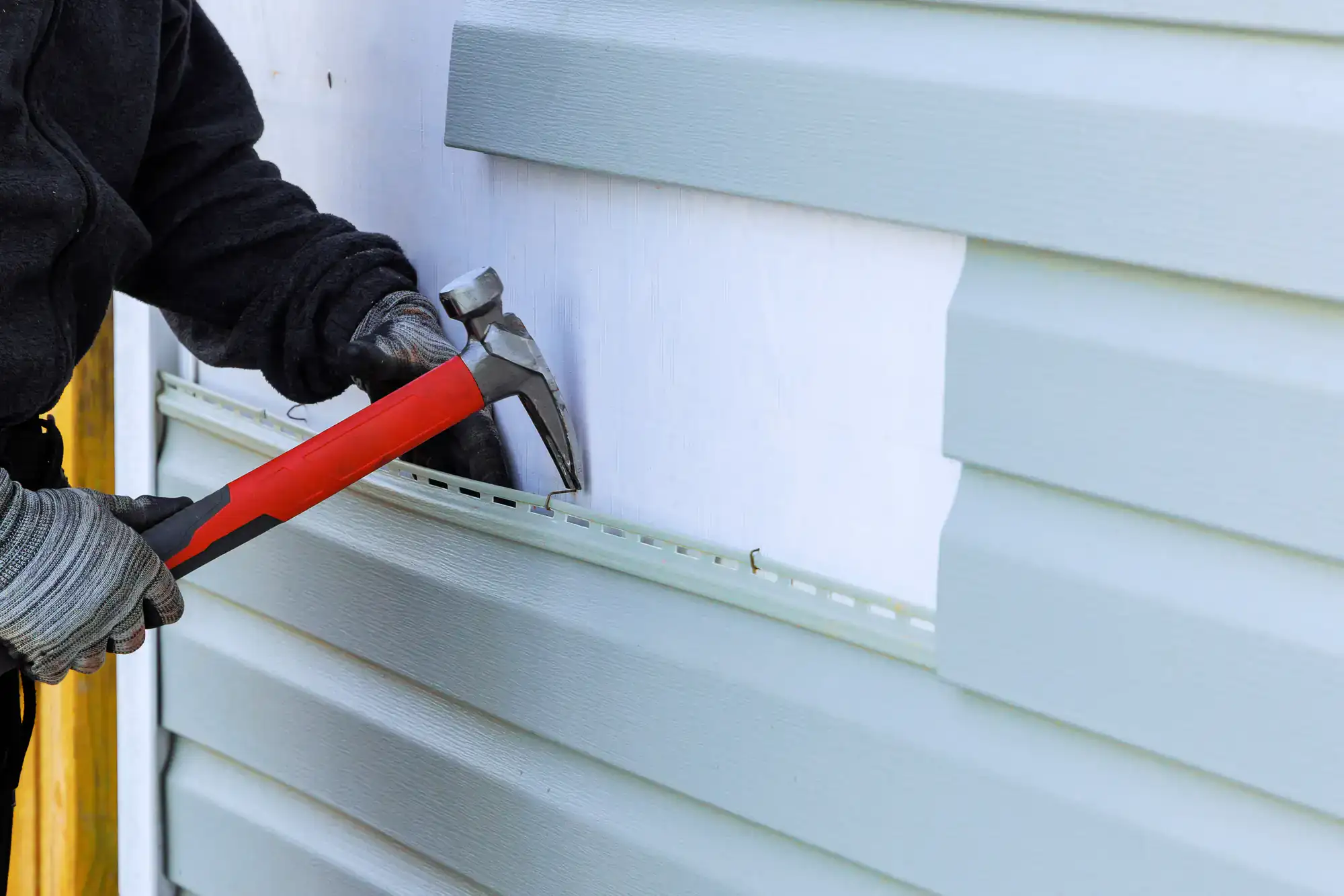
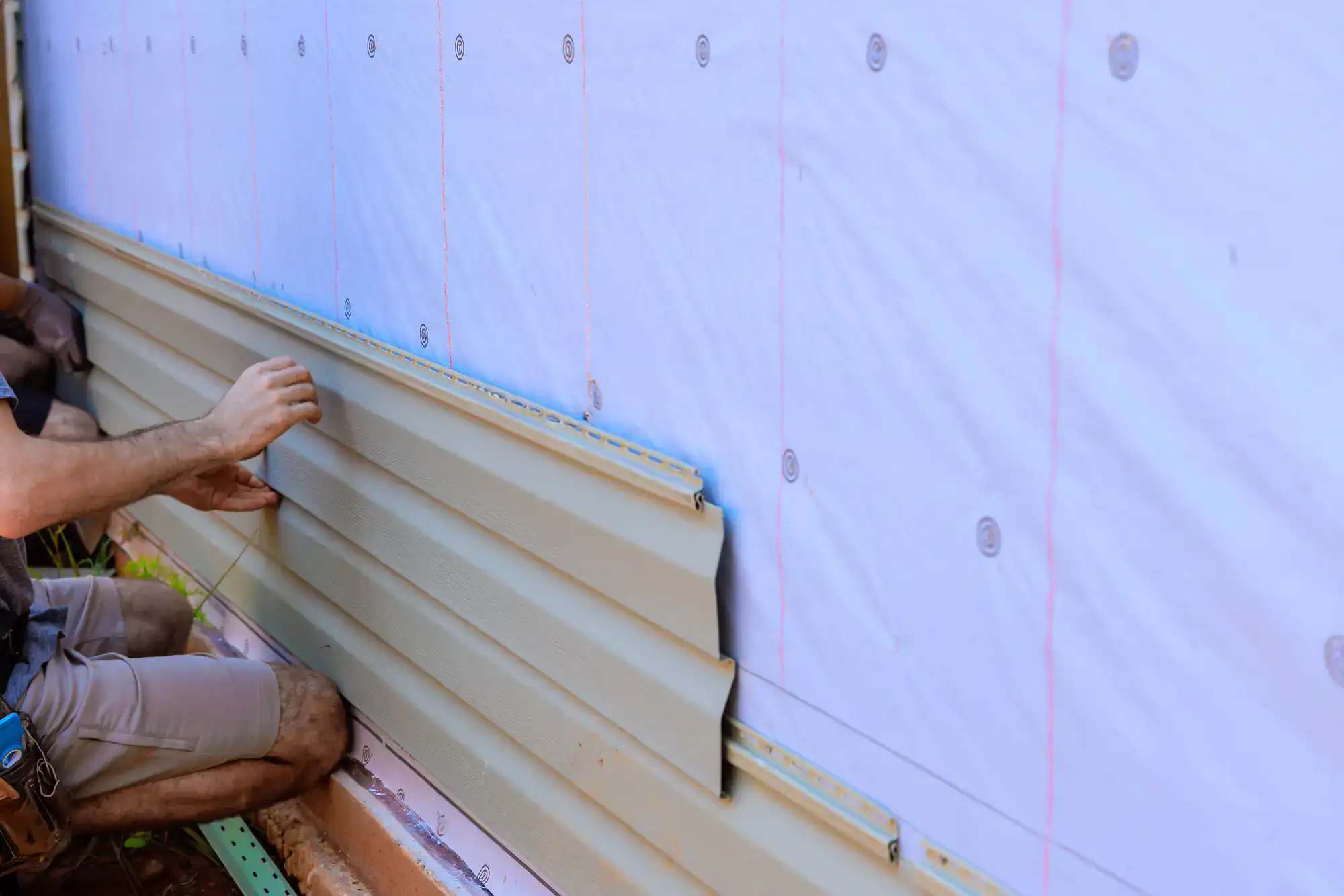
Next, we remove your old siding and install a proper moisture barrier. This isn’t optional in Brentwood. Coastal wind drives rain sideways, and without a quality underlayment, water will find its way in. We use barriers designed for high-moisture environments and tape every seam.
Then we install the vinyl panels, starting from the bottom and working up. Each panel locks into the one below it and gets fastened to your home’s sheathing—not too tight, because vinyl needs room to expand and contract with temperature swings. We leave the right gaps at corners and around windows so nothing buckles when it heats up in July.
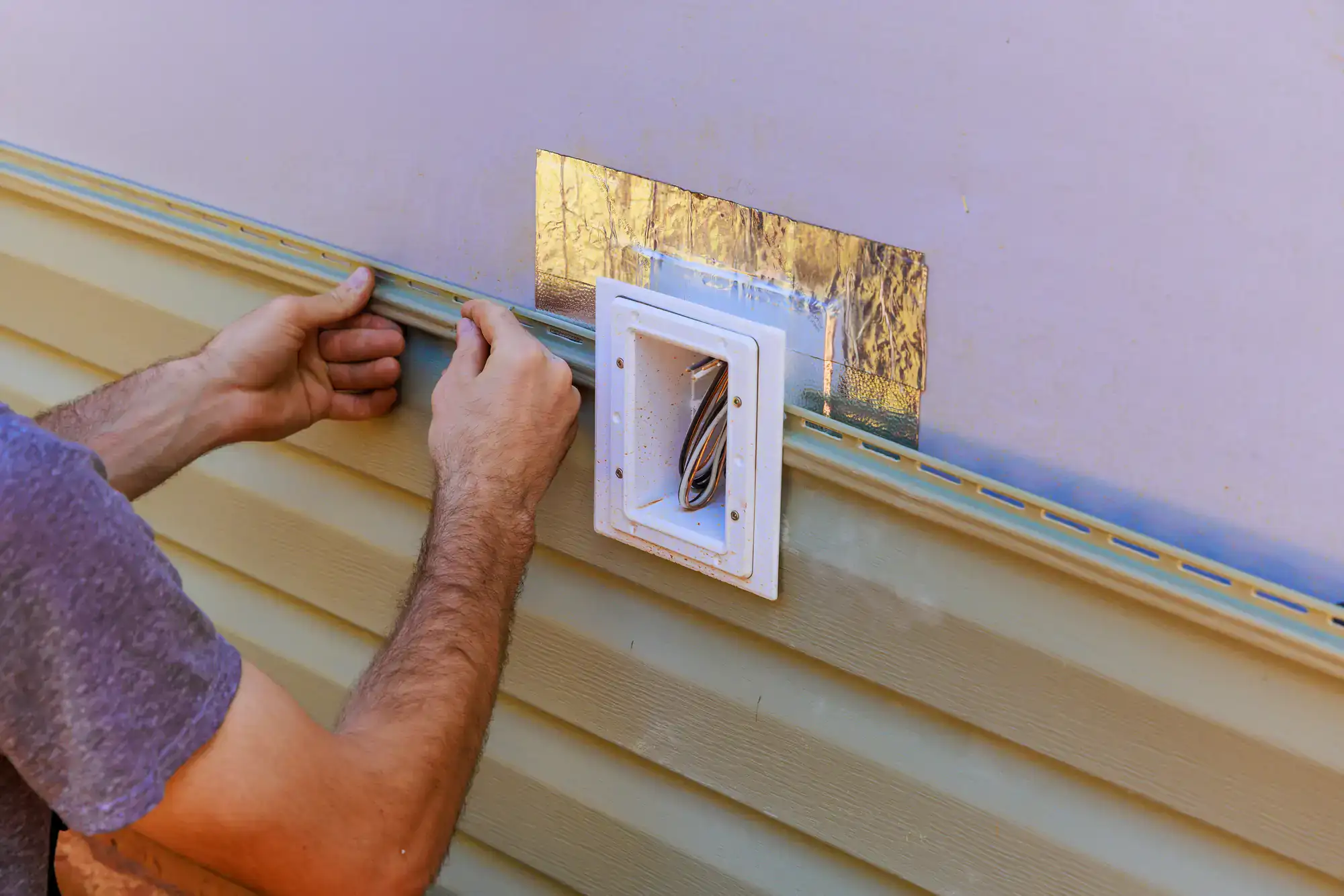
Finally, we install trim, J-channels, and corner posts that complete the weather seal. We clean up completely, haul away old materials, and walk you through the finished job so you know exactly what was done.
Ready to get started?
You’re getting panels rated for high wind resistance—important in Brentwood where coastal storms regularly hit 50+ mph gusts. The vinyl we install is engineered to handle those conditions without ripping loose or cracking under impact from debris.
Insulated vinyl is available if energy efficiency matters to you, and in most Brentwood homes, it should. The insulation backing reduces air leakage and can drop your heating and cooling costs noticeably. You’re looking at an extra dollar or two per square foot, but the return shows up in your utility bills within the first year.
Color options are extensive—deep blues and grays are popular in coastal areas right now, and the fade-resistant formulations actually hold up under UV exposure. You’re not stuck with builder-grade white unless that’s what you want. Textures that mimic wood grain are available too, if you like the look of cedar shakes without the maintenance nightmare.
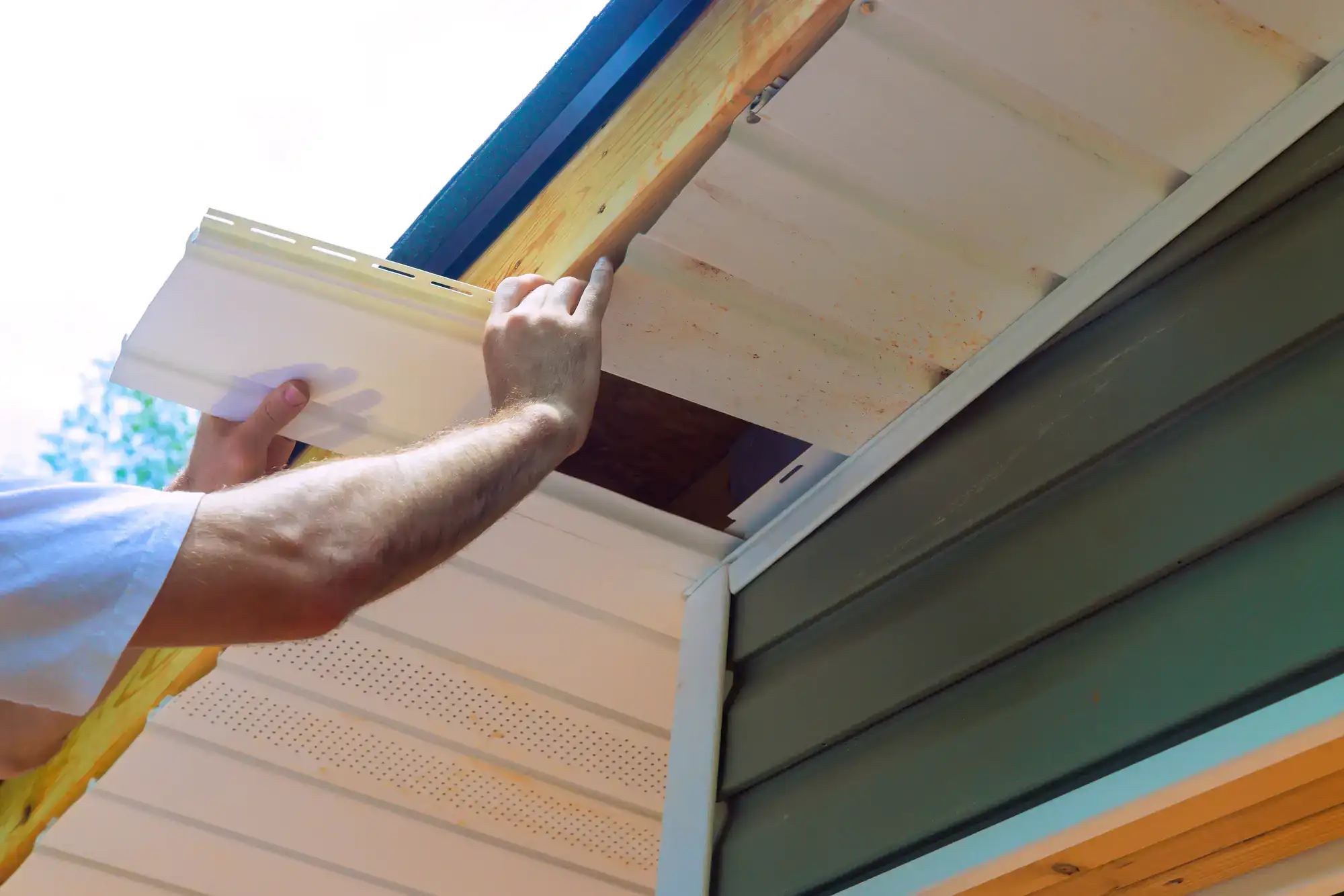
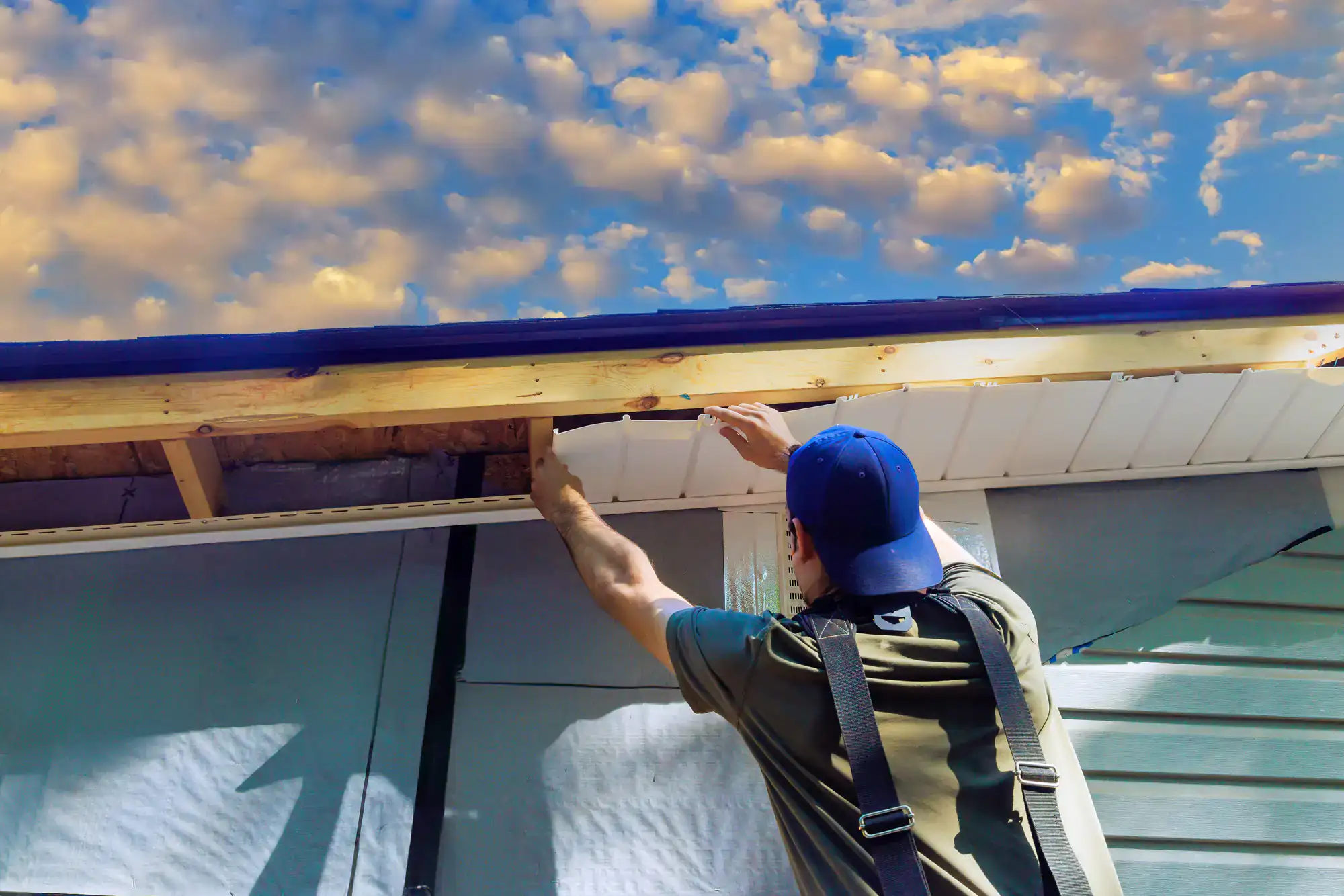
We also handle all the trim work: soffit, fascia, corners, and window surrounds. Everything gets sealed properly so water can’t sneak behind the siding. In Brentwood’s climate, that attention to detail is what separates a 20-year installation from a 40-year one.
Quality vinyl siding installed correctly lasts 30 to 40 years in Brentwood, sometimes longer if you go with premium materials. The key word is “installed correctly”—because coastal conditions will find and exploit every shortcut.
Salt air accelerates aging on any exterior material, but vinyl handles it better than most options. It doesn’t absorb moisture like wood, doesn’t corrode like metal, and doesn’t need repainting when the finish oxidizes. What kills vinyl prematurely in coastal areas is poor installation—panels fastened too tightly that can’t expand and contract, missing moisture barriers that let water behind the siding, or cheap materials that weren’t rated for high wind or UV exposure.
If you’re seeing vinyl siding fail early in Brentwood, it’s usually an installation problem, not a material problem. Properly installed panels with room to move, quality underlayment, and correct flashing around windows will outlast most other siding options and require almost zero maintenance while doing it.
You’re looking at $12,000 to $24,000 for most Brentwood homes in 2024, depending on square footage and whether you choose standard or insulated vinyl. That’s the honest range for quality work—not the cheapest quote you’ll get, but not the inflated numbers either.
Labor costs run higher on Long Island than national averages, and material costs have climbed over the past few years. But vinyl is still the most cost-effective siding option when you factor in longevity and maintenance. Compare that to wood siding that needs repainting every 5-7 years at $3,000-$5,000 per paint job, and vinyl pays for itself.
Insulated vinyl adds $1 to $4 per square foot to your total, but it’s worth considering in Brentwood. The energy savings are real—most homeowners see their heating and cooling costs drop enough to recover that premium within 5-7 years. Plus, when you sell, homes with updated, insulated siding typically see $15,000 to $30,000 increases in resale value. You’re not just spending money, you’re repositioning your home’s value and cutting ongoing costs.
Yes, and there are actually advantages to winter installation if you’re working with experienced vinyl siding contractors in Brentwood who know how to handle cold-weather techniques.
Vinyl becomes more brittle in cold temperatures, so it requires different cutting and fastening methods. Experienced installers use specialized tools, make cuts more carefully, and adjust fastener placement to account for the material’s reduced flexibility. The panels still lock together correctly and seal properly—it just takes more precision.
Winter installation often means better contractor availability and sometimes seasonal pricing that works in your favor. You’re also getting immediate energy savings right when you need them most—if your old siding was leaking air, you’ll notice the difference in your heating bill that same winter. The key is hiring vinyl siding installation contractors who’ve done this before in cold weather and know the adjustments needed. Rushed summer crews trying to squeeze in one more job before snow flies? That’s where problems happen.
Water stains on your interior walls are the clearest sign you’ve moved past cosmetic into serious territory. If you’re seeing discoloration, peeling paint inside your home, or smelling mustiness near exterior walls, water has been getting behind your siding for a while.
Other red flags: bubbling or warped sections of interior drywall, especially near windows or corners where siding joints meet. Drafts you can feel when you put your hand near baseboards on exterior walls. Heating or cooling systems running constantly but not keeping up. These all point to siding that’s no longer protecting your home’s envelope.
From the outside, look for cracks in vinyl panels, loose or missing pieces after storms, or sections that appear warped or pulled away from the house. In Brentwood’s climate, even small gaps let wind-driven rain penetrate, and once moisture gets into your wall cavity, you’re dealing with potential mold and rot in the sheathing and framing. A professional inspection catches these issues before they migrate deeper into your home’s structure. We know where water typically enters on Long Island homes and can spot vulnerable areas during a walkthrough that most homeowners miss.
Insulated vinyl siding genuinely reduces energy costs—this isn’t marketing fluff, it’s measurable in your utility bills. Standard vinyl provides some insulation value, but insulated vinyl with foam backing creates a continuous thermal barrier that cuts air leakage significantly.
Here’s what happens: older homes in Brentwood often have minimal wall insulation and plenty of gaps where air escapes. When you install insulated vinyl siding, you’re adding an R-value of 2 to 4 on top of whatever insulation exists in your walls, plus you’re sealing up those air leaks. Your HVAC system doesn’t have to work as hard to maintain temperature, and you’re not literally heating or cooling the outdoors through gaps in your exterior.
Most Brentwood homeowners with insulated vinyl see 10-20% reductions in heating and cooling costs. That varies based on your home’s age, existing insulation, and how much air leakage you had before, but the savings are real and ongoing. You’re paying more upfront for insulated panels, but you’re getting that money back through lower energy bills while also making your home more comfortable year-round. Rooms that used to feel drafty in winter or hot in summer stabilize because your building envelope is actually doing its job.
You need to wash it once a year, and that’s about it. Coastal environments throw salt spray, pollen, algae, and general grime at your siding, so an annual cleaning keeps it looking good and prevents any buildup that could degrade the finish over time.
Use a garden hose or pressure washer on a low setting—high pressure can force water behind the panels. Mix up basic household cleaner or buy vinyl siding cleaner from any home improvement store, spray it on, scrub gently with a soft brush if needed, and rinse thoroughly. The whole job takes a couple hours for most homes.
Beyond that, walk around your house once or twice a year and look for any loose panels, cracks, or damage from storms or impacts. Brentwood gets enough severe weather that it’s worth checking after major storms. If you spot damage, get it repaired quickly—one loose panel can let water in, and water damage spreads. But you’re not painting, staining, sealing, or doing any of the ongoing maintenance that wood, stucco, or fiber cement require. That’s the actual advantage of vinyl siding installation in Brentwood—it performs without constant attention, which matters when you’ve got better things to do than maintain your exterior every few months.
Other Services we provide in Brentwood