Summary:
How to Tell If Your Skylight Is Actually Leaking
The first question isn’t whether you need skylight repair—it’s whether you’re dealing with a leak at all. Moisture around your skylight doesn’t automatically mean water is coming through the roof, and that distinction matters because the solutions are completely different.
True leaks show specific patterns. Water stains or drips that appear during or right after rainfall point to an actual breach in your roofing system. You’ll typically see discoloration on the ceiling or walls near the skylight, and the problem gets worse during heavy storms.
Condensation looks different. It appears as moisture spread evenly across the glass surface, usually during sudden temperature changes. If you notice fog or water droplets on the interior pane when it’s cold outside but not raining, you’re probably seeing condensation, not a leak. Rooms with high humidity—kitchens, bathrooms—are especially prone to this.
What causes skylight flashing to fail in Suffolk County
Flashing failure is the number one reason skylights leak in Suffolk County, and understanding why it happens helps you spot problems early. The metal flashing around your skylight creates a waterproof barrier between the unit and your roof. When that barrier fails, water finds its way in.
Suffolk County’s coastal climate is particularly brutal on flashing. Salt air accelerates corrosion on metal components, especially on older aluminum or galvanized steel flashing. You’ll see rust stains, pitting, or visible deterioration around the skylight perimeter.
Temperature swings cause constant expansion and contraction. When your flashing heats up in summer sun and contracts during winter freezes, the metal eventually cracks or pulls away from the roofing material. Those gaps let water seep underneath during the next storm.
Improper installation is more common than most homeowners realize. When contractors don’t follow manufacturer specifications—wrong overlap, inadequate sealing, or skipping steps to save time—the flashing fails prematurely. Sometimes the installation looked fine for years until normal wear exposed the underlying problem.
Ice dams create unique pressure on Long Island. When snow melts higher on your roof and refreezes around the skylight, that ice forces water under the flashing. Winter leak patterns often point to ice dam issues rather than the skylight itself.
The tricky part about flashing leaks is that water rarely appears directly below the problem. It travels along roof decking and rafters before dripping into your home, sometimes several feet away from the actual entry point. That’s why homeowners often misdiagnose the source and waste money treating symptoms instead of causes.
Checking your flashing twice a year—spring and fall—catches problems before they become emergencies. Look for separated joints, rust stains, or gaps between the metal and roofing material. But getting on your roof safely requires proper equipment and experience, which is why professional inspections catch issues homeowners miss.
Why DIY skylight resealing usually fails within months
You see water coming in, you grab a tube of caulk or roofing sealant, and you seal around the skylight edges. The leak stops. Problem solved, right? Not quite.
DIY resealing with standard caulk or tar provides temporary relief at best. The binding agents in consumer-grade sealants break down quickly when exposed to Suffolk County’s temperature extremes and UV radiation. What holds in July cracks and peels by January, and you’re back where you started—except now you’ve made the professional repair more complicated.
The bigger issue is that surface sealing doesn’t address what’s actually failing. If your flashing is corroded, bent, or improperly installed, adding sealant on top does nothing to fix the structural problem. You’re covering symptoms while the root cause continues to deteriorate underneath.
Applying sealant in the wrong places can actually create new problems. Skylights are designed to channel water to specific drainage points. When you seal those pathways, water gets trapped and finds new routes into your home. Some homeowners unknowingly seal over weep holes—the small drainage channels that let condensation escape—which causes moisture buildup inside the skylight frame.
Tar and mastic compounds are particularly problematic. They might seem like heavy-duty solutions, but they prevent the natural expansion and contraction that skylights need to function properly. Acrylic skylights expand in heat and contract in cold. When you lock them in place with tar, the acrylic eventually cracks from the stress.
Professional repairs involve removing old materials, properly preparing surfaces, and installing new flashing or seals according to manufacturer specifications. The materials are different too—commercial-grade sealants rated for roof applications, proper flashing sized to your specific skylight, and installation techniques that account for water flow and thermal movement.
The cost difference between DIY and professional repair seems significant until you factor in doing the DIY fix multiple times. A $30 tube of caulk that fails every six months adds up fast, not to mention the water damage happening during those failure periods. Professional skylight leak repair typically costs between $225 and $800 depending on the issue, but it actually addresses the problem instead of postponing it.
If you’ve already attempted DIY repairs, be upfront with your contractor. We need to know what’s been applied so we can properly remove it and assess the underlying damage. Trying to hide previous attempts just makes the diagnosis harder and potentially more expensive.
Common Skylight Problems Beyond Simple Leaks
Not every skylight issue involves water actively dripping into your home. Some problems develop slowly, giving you time to address them before they become emergencies—if you know what to look for.
Cracked or foggy glass signals seal failure. When you see condensation trapped between the panes of a double-glazed skylight, the insulated glass unit has failed. This isn’t something you can repair; the entire glass assembly needs replacement. Small cracks in the glass itself might seem manageable, but they expand with temperature changes and eventually allow water infiltration.
Worn weatherstripping and gaskets cause drafts and minor leaks. The rubber seals around operable skylights deteriorate from sun exposure and temperature cycling. You’ll notice air leaks around the frame, higher heating and cooling costs, or small amounts of water entry during wind-driven rain. Replacing weatherstripping is relatively straightforward if the frame itself is still sound.
When skylight age means replacement makes more sense than repair
The repair versus replacement decision isn’t always obvious, but skylight age plays a major role in making the right call. Most skylights have a functional lifespan of 15 to 20 years, with higher-quality models potentially lasting longer in ideal conditions. Suffolk County’s weather isn’t ideal conditions.
If your skylight is approaching or past that 15-year mark and developing problems, replacement often makes more financial sense than investing in repairs. Here’s why: when one component fails on an older skylight, others are usually close behind. You might fix the flashing this year, only to need new glass seals next year and frame repairs the year after. Those cumulative costs quickly exceed replacement pricing.
Recurring leaks despite previous repairs strongly suggest the skylight has reached the end of its useful life. If you’ve had professional repairs done and problems keep returning, you’re probably dealing with multiple failure points or fundamental installation issues that repair can’t fully address.
Energy efficiency considerations matter too. Skylights manufactured 15 or 20 years ago lack the insulation and low-E coatings standard in modern units. An old skylight might be costing you hundreds annually in energy losses. When you factor in those ongoing costs, replacement pays for itself over time through reduced heating and cooling bills.
Storm damage assessment requires honest evaluation. If hail or fallen branches have cracked your skylight glass, and the unit is already older, replacement gives you a fresh start with better materials and modern energy efficiency. Insurance often covers storm damage, making this an opportune time to upgrade rather than just repair.
The type of skylight affects this calculation. Fixed skylights tend to last longer than operable ones because they have fewer moving parts and seals to fail. If you have an older ventilating skylight with motor problems and seal leaks, the cost to repair both systems might approach replacement cost.
Professional assessment helps you make this decision based on facts rather than guesswork. We can show you exactly what’s failing, estimate remaining lifespan of other components, and provide cost comparisons for repair versus replacement scenarios. We’ll explain why we’re recommending one approach over the other in terms you can understand.
What professional skylight flashing repair actually involves
Professional flashing repair looks nothing like DIY caulking, and understanding the process helps you evaluate contractors and know what you’re paying for.
The work starts with proper diagnosis. We inspect both the interior and exterior of your skylight, checking moisture damage patterns, seal integrity, flashing condition, and the surrounding roof structure. We’re looking for the actual source of water entry, not just visible symptoms. This often involves water testing—carefully applying water to specific areas while someone watches from inside to trace the exact entry point.
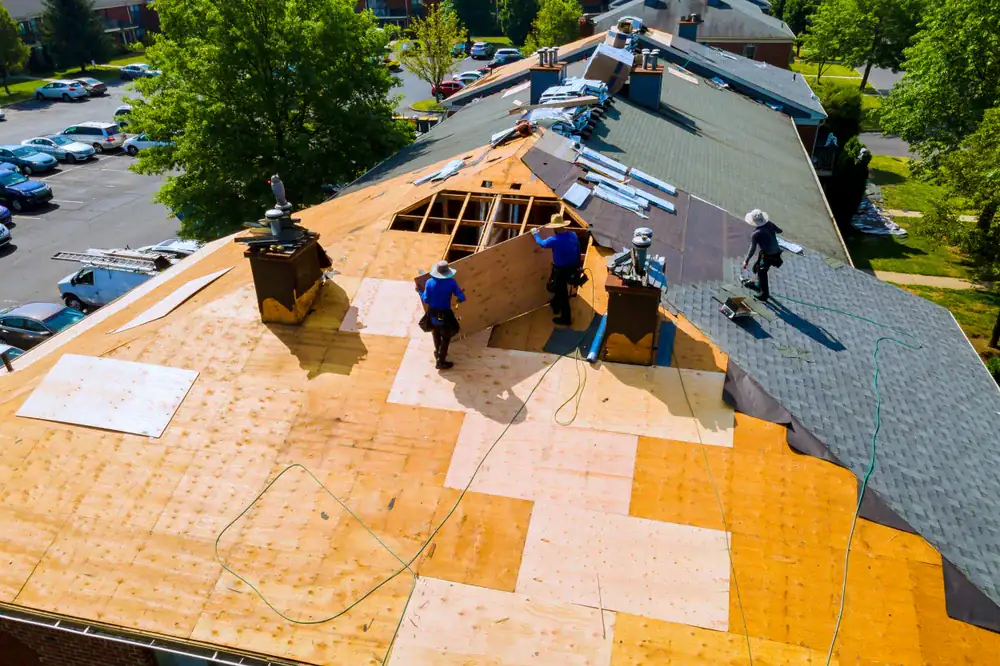
Removing old materials comes next. We carefully lift surrounding shingles without damaging them, remove failed flashing, and clean away old sealants and debris. This exposes the actual condition of the roof deck and skylight frame. Sometimes we discover rot or structural damage that wasn’t visible before, which needs addressing before new flashing goes in.
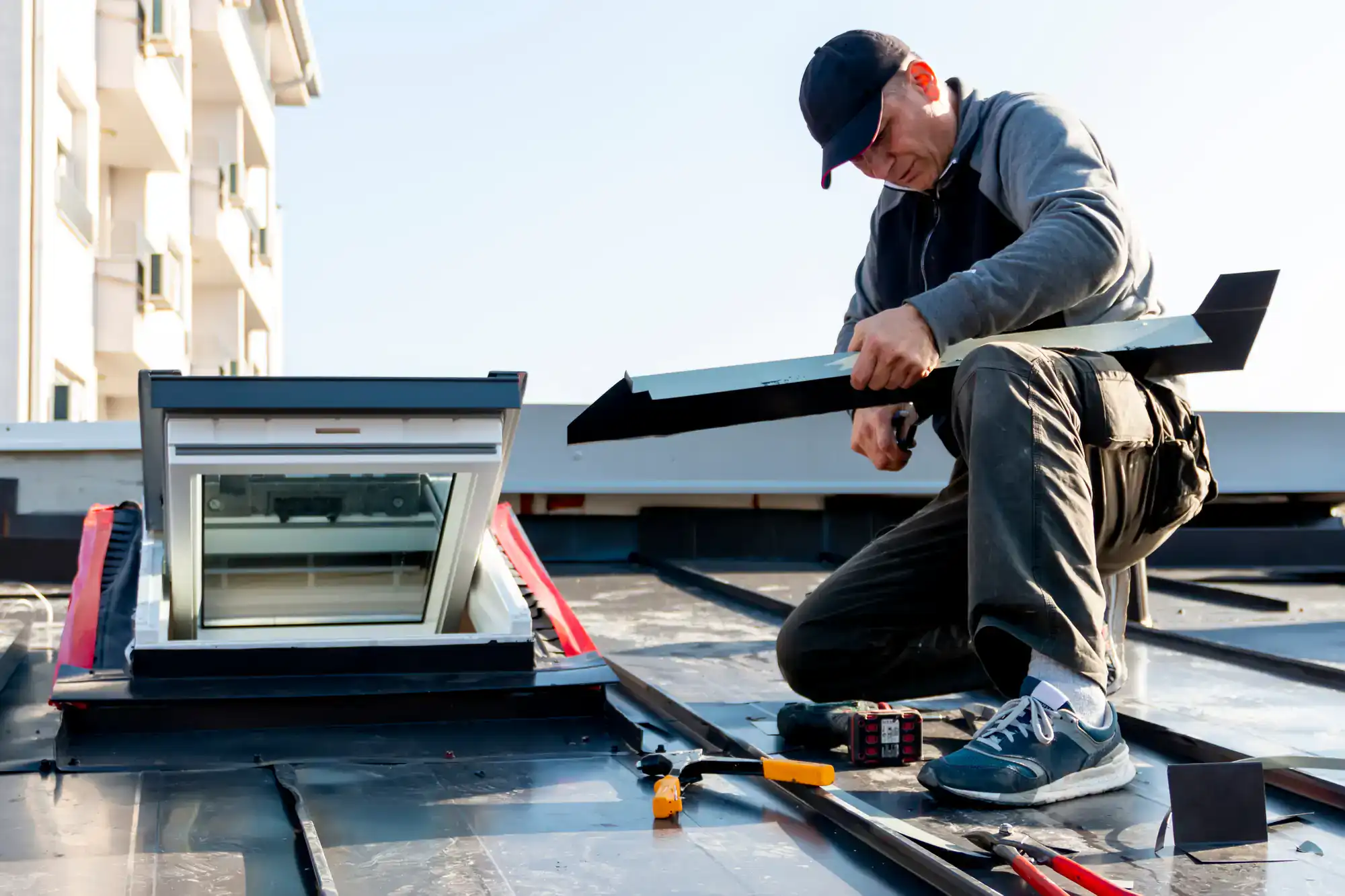
Installing new flashing requires precision. Professional-grade flashing comes in specific pieces—step flashing for the sides, head flashing for the top, and apron flashing for the bottom. Each piece overlaps correctly to direct water down and away from the skylight. The metal gets integrated with your roofing material in a specific sequence, with proper underlayment and ice-and-water shield in vulnerable areas.
Sealing happens at critical junctions using commercial-grade sealants rated for roof applications. These aren’t the tubes you buy at hardware stores. Professional sealants remain flexible through temperature extremes, resist UV degradation, and maintain their bond for years. We apply them strategically at joints and seams, not smeared everywhere.
Shingle replacement and blending completes the job. We reinstall the shingles we lifted, add roofing cement where needed, and ensure everything lies flat and sealed. When done properly, you shouldn’t be able to tell where the work was performed.
We provide documentation—photos of the damage we found, the work performed, and the completed installation. This serves multiple purposes: it helps you understand what was done, provides records for insurance or future buyers, and demonstrates the thoroughness of our work.
The cost for professional flashing repair typically ranges from $300 to $800, depending on the extent of damage and accessibility. That includes proper materials, skilled labor, and usually some form of workmanship warranty. Compare that to repeated DIY attempts that don’t actually fix anything, and the value becomes clear.
Getting Your Suffolk County Skylight Repaired the Right Way
You’ve figured out whether you’re dealing with condensation or an actual leak. You understand why that tube of caulk won’t solve a flashing problem. Now you need to make a decision about what happens next.
The most important step is getting an accurate diagnosis from someone who understands Suffolk County’s specific climate challenges. Coastal weather, freeze-thaw cycles, and salt air create failure patterns that require local expertise to properly address. A contractor who knows Long Island understands that what works in other regions might fail here within a season.
Don’t wait for small problems to become structural nightmares. Water damage compounds quickly—what starts as a ceiling stain can become rotted framing, moldy insulation, and damaged drywall in just a few months. Early intervention on skylight issues saves money and protects your home’s structural integrity.
When you’re ready for an honest assessment and professional repair that actually addresses the root cause, we bring the local expertise Suffolk County homeowners need. Your skylight should bring light into your home, not water and worry.