
Hear from Our Customers
You stop worrying every time dark clouds roll in from the Sound. Water flows exactly where it should—away from your foundation, away from your basement, away from the landscaping you’ve spent years building.
Your fascia boards stay dry and solid instead of rotting behind failing gutters. No more water stains streaking down your siding after every rain. No more erosion eating away at your foundation.
When gutters are fixed correctly, you’re not just patching a problem. You’re protecting everything below them. That means your basement stays dry during spring storms. Your foundation doesn’t develop cracks from constant water exposure. And you’re not facing a $5,000+ emergency repair bill because a small leak turned into structural damage.
Most gutter problems in Peconic start small—a loose seam here, a minor sag there. But coastal storms don’t care about small problems. They find every weak point and make it worse. That’s why catching issues early and fixing them properly matters more here than almost anywhere else.
We’ve been handling exterior work across Suffolk County for years, and we’ve seen what happens when gutters fail in coastal communities like Peconic. Salt air corrodes metal faster than most homeowners expect. Nor’easters dump debris and test every joint. Freeze-thaw cycles pull hangers loose all winter long.
We’re a family operation, which means you’re not getting a different crew every time or a corporate runaround when you call. You’re getting people who understand that gutter problems don’t wait for convenient timing and that your home is probably your biggest investment.
Every repair we do accounts for local conditions. We’re not just sealing a leak—we’re making sure it holds up when the next coastal storm rolls through. That’s the difference between a quick fix and actual professional gutter repair.
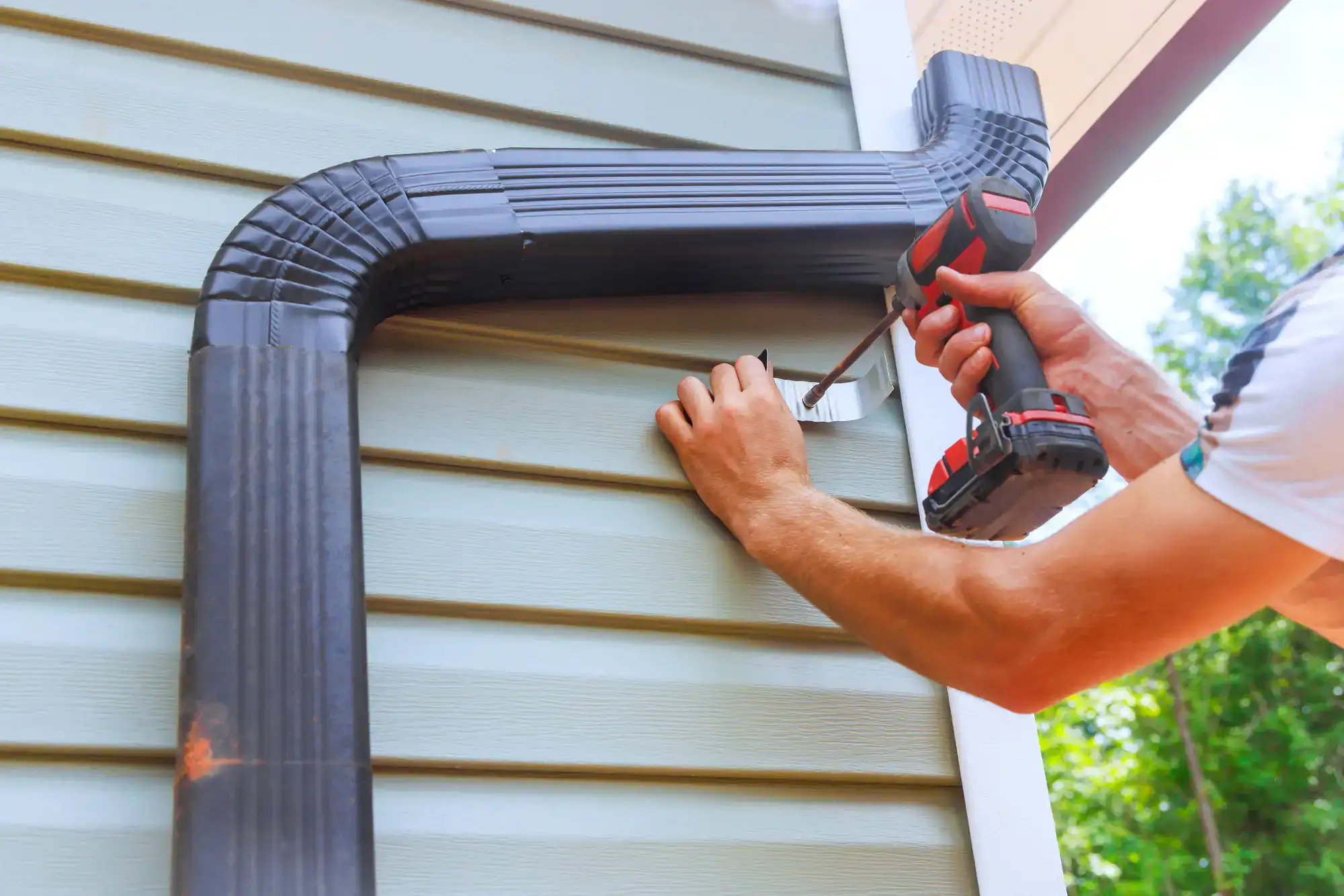
First, we come out and actually look at what’s going on. Not a quick glance from the ground—we’re talking about a real inspection of your entire gutter system. We check for leaks at seams and corners, look for sagging sections, inspect fascia boards for water damage, and make sure downspouts are directing water far enough from your foundation.
Then we tell you what needs fixing and what it’ll cost. No surprises, no upselling you on work you don’t need. If you’ve got a gutter leaking at the corner, we’re not going to tell you the whole system needs replacement unless it actually does.
The repair itself depends on what’s wrong. Leaking gutter joints get properly resealed with commercial-grade sealant that holds up in coastal conditions. Sagging gutters get rehung with the right pitch so water flows toward downspouts instead of pooling. Damaged fascia boards get replaced before we reattach anything. Holes and rust spots get patched or that section gets replaced if it’s too far gone.
After the work’s done, we test everything. We want to see water flowing correctly before we leave. And if a storm hits a week later and something’s not right, we come back. That’s how this should work.
Ready to get started?
Most gutter repairs in Peconic fall into a few categories, and they’re all driven by the same thing—coastal weather that doesn’t let up.
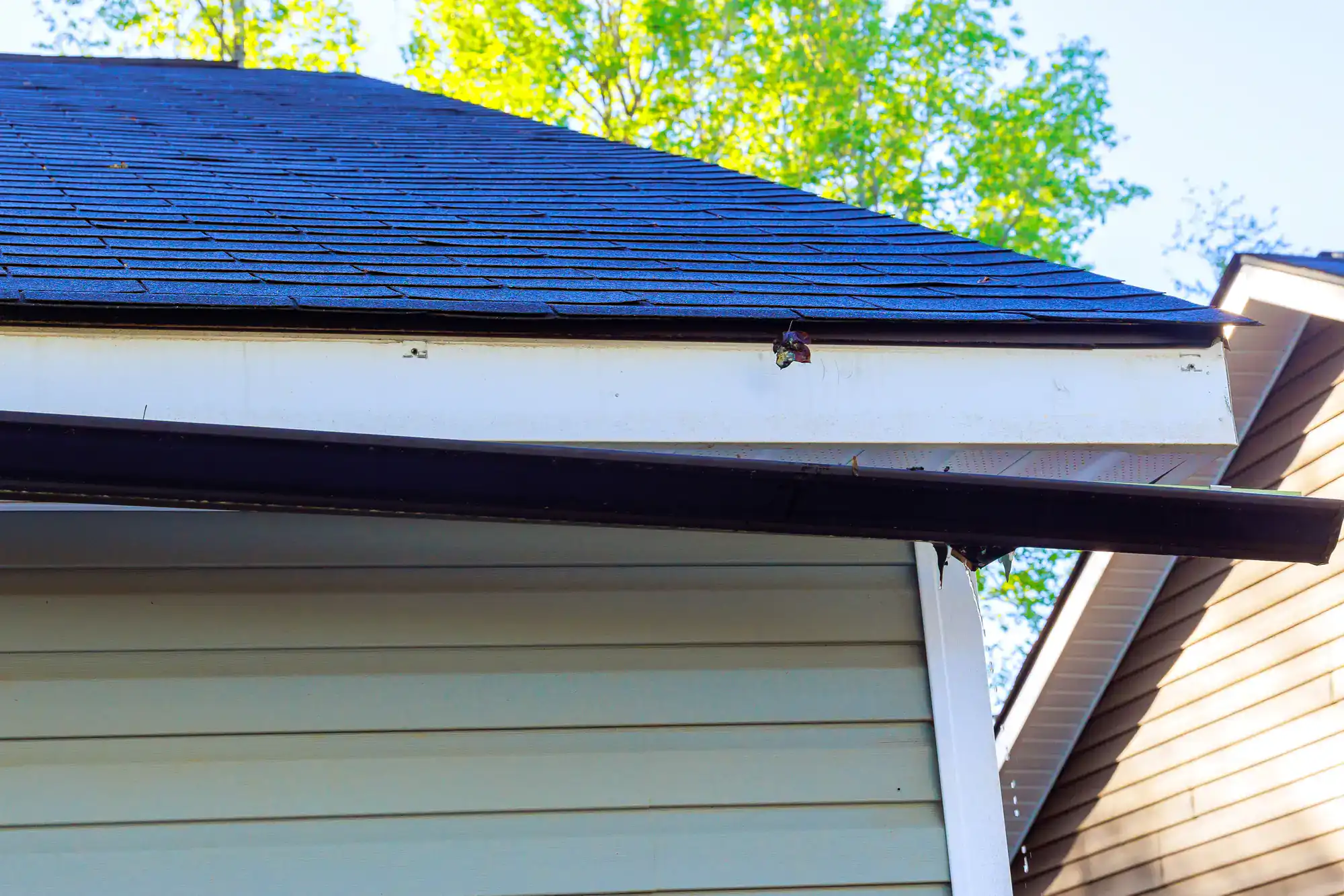
Gutter leak repair is probably the most common call we get. Seams separate over time, especially when salt air speeds up corrosion. Corners develop gaps when hangers pull loose during storms. We reseal these properly using materials designed for Long Island’s climate, not the stuff you grab at a hardware store that fails in six months.
Sagging gutters are the next big issue. When gutters sag, water pools instead of draining. That standing water leads to more corrosion, more leaks, and eventually total failure. We rehang sagging sections with proper spacing and pitch, and we replace any rotted fascia board before reattaching—because mounting gutters to damaged wood just means you’ll be calling someone again next year.
Storm damage gutter repair picks up after every nor’easter. High winds pull gutters away from rooflines. Heavy debris clogs downspouts and causes overflow that damages everything below. We handle emergency gutter repair year-round because these problems can’t wait.
Fascia board repair often goes hand-in-hand with gutter work. If your fascia is rotted, your gutters can’t be secured properly. We replace damaged boards so your gutter system has solid backing—otherwise you’re just mounting failing equipment to failing wood.
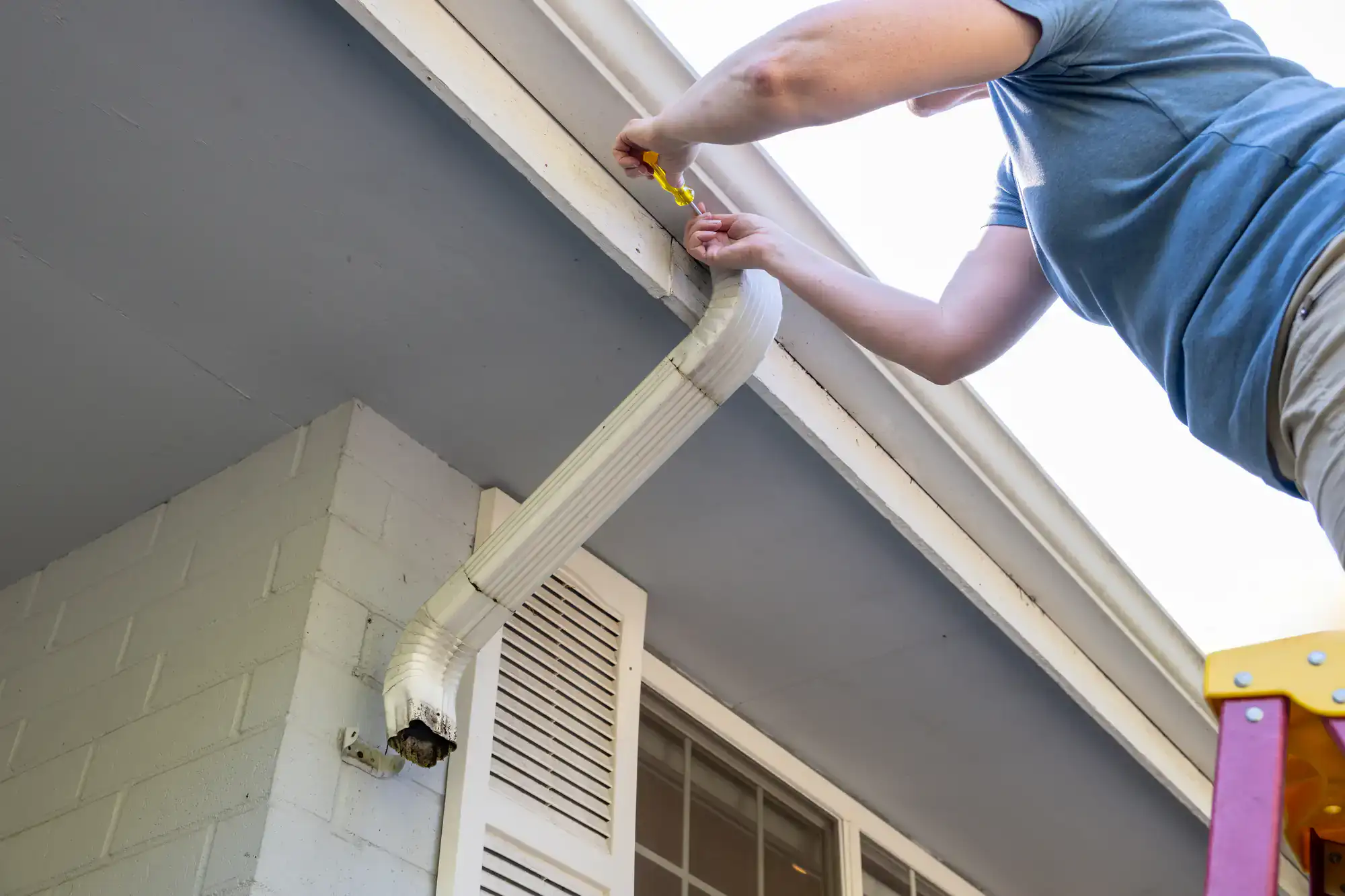
Most minor gutter repairs—fixing a leak, resealing a seam, patching a small hole—run between $150 and $400. That’s the typical range for straightforward fixes that don’t involve major structural work.
If you need a section of gutter replaced because of storm damage or extensive rust, you’re looking at $400 to $1,200 depending on how much needs replacing and what material we’re working with. Aluminum is less expensive than copper, and seamless sections cost more than standard gutters but last longer in coastal conditions.
Fascia board replacement adds to the cost because it’s a separate repair, but it’s necessary if the wood behind your gutters is rotted. Mounting new gutters to damaged fascia just means you’ll have the same problem again in a year. That work typically runs $500 to $1,500 depending on how much board needs replacing.
The real cost savings come from fixing problems early. A $200 gutter seam repair now prevents a $5,000 foundation repair later. Water damage doesn’t stay contained—it spreads to siding, framing, and structural components if gutters keep failing.
Yes. Storms don’t happen on a schedule, and neither do the problems they cause. We respond to emergency calls year-round, including after major weather events when gutters get damaged or torn away from rooflines.
After a nor’easter or heavy coastal storm, we prioritize calls where gutters are actively failing—meaning water is pouring into basements, pooling against foundations, or causing immediate damage. Those situations can’t wait for a regular appointment.
Emergency gutter service typically involves temporary stabilization first, then a full repair once we can assess everything properly. If a section of gutter is hanging loose and threatening to pull more away, we secure it immediately. Then we come back to do the complete fix—rehanging, resealing, replacing damaged sections, whatever’s needed.
The key is calling as soon as you notice a problem. A gutter that’s slightly pulled away after a storm will get worse with the next rain. A small leak becomes a major failure point when the next heavy weather hits. Coastal conditions accelerate damage faster than most people expect.
Sagging gutters usually come down to three things: improper installation, debris buildup, or storm damage. Sometimes it’s all three working together.
If gutters weren’t hung with enough support or the right pitch to begin with, they’ll start sagging within a few years. Water pools in low spots instead of draining, which adds weight and makes the sag worse. In Peconic, where we get 40-50 inches of rain annually plus heavy snow, that extra weight pulls hangers loose and bends the gutter itself.
Debris is the other major culprit. Leaves, twigs, and sand from coastal storms clog gutters and add significant weight. A gutter full of wet leaves and standing water weighs a lot more than an empty one, and that constant load eventually pulls the whole system away from the fascia.
Storm damage accelerates everything. High winds catch the edge of a gutter and pull it loose. Heavy ice buildup in winter adds weight that hangers weren’t designed to support. Once a gutter starts pulling away, every subsequent storm makes it worse until the whole section fails.
Fixing sagging gutters means rehanging them properly—not just screwing them back into the same holes. We add support where needed, ensure proper pitch for drainage, and replace any damaged fascia board so there’s solid backing for the hangers.
Yes, but it usually means the fascia board itself is damaged and needs attention before we can properly fix the gutter. When water leaks behind gutters, it’s often because the gutter has pulled away from the fascia slightly or the seal between them has failed.
That water then sits against the fascia board—which is just wood—and causes rot over time. Once fascia is rotted, you can’t just reseal the gutter and call it fixed. The wood won’t hold fasteners properly, and the problem will come right back.
We start by pulling the gutter away to inspect the fascia. If there’s rot, we cut out the damaged section and replace it with new board. Then we rehang the gutter with proper flashing and sealing so water can’t get behind it again.
This is extremely common in Peconic because coastal moisture accelerates wood rot. Salt air, high humidity, and frequent rain all contribute. If you’re seeing water stains on your fascia or the paint is peeling behind your gutters, that’s a sign the problem is already developing.
Catching it early matters. Minor fascia damage is a few hundred dollars to fix. Extensive rot that spreads into roof framing or structural components can run into thousands. Water doesn’t stop at the fascia—it keeps moving into whatever’s behind it.
A properly done gutter repair should last 5-10 years minimum, even in coastal conditions. But that assumes the repair was done right in the first place and you’re keeping up with basic maintenance like cleaning debris out twice a year.
The lifespan depends heavily on what was repaired and what materials were used. A gutter seam that’s resealed with commercial-grade sealant designed for coastal environments will hold up significantly longer than one sealed with standard hardware store caulk. Same goes for hangers—stainless steel or heavy-duty aluminum hangers resist corrosion better than cheap galvanized ones.
Coastal conditions do shorten the lifespan of everything compared to inland areas. Salt air accelerates metal corrosion. High winds test every joint and hanger. Frequent freeze-thaw cycles in winter cause expansion and contraction that loosen fasteners over time. That’s just reality in Peconic.
The repairs that fail quickly are usually ones where someone took shortcuts. They resealed a leaking seam but didn’t address why it was leaking in the first place. They rehung a sagging gutter without fixing the rotted fascia behind it. They patched a rust hole but didn’t deal with the drainage issue causing water to pool there.
When we repair gutters, we’re looking at the whole system—not just the obvious problem. That’s what makes the repair last. You’re not calling us back next year for the same issue.
It depends on how extensive the damage is and how old your current gutter system is. If you’re dealing with one or two isolated problems—a leaking corner, a sagging section—repair almost always makes more sense financially.
But if your gutters have multiple leaks, widespread rust, several sagging sections, and damaged fascia in multiple spots, you’re often better off replacing the system. At that point you’re looking at $800-1,500 in repairs on gutters that are going to develop new problems within a year or two anyway.
Here’s a practical way to think about it: if the repair costs are approaching 50% or more of what replacement would cost, replacement usually makes more sense. You’re getting a completely new system with a warranty instead of patching an old one that’s failing in multiple places.
Age matters too. If your gutters are 15-20 years old and showing significant wear, they’re near the end of their lifespan anyway. Coastal conditions are hard on gutter systems, and older gutters have been dealing with salt air and storms for years. Repairing them might buy you a couple more years, but replacement gives you 20+ years of reliable performance.
We’ll tell you honestly which makes more sense for your situation. If repairs will actually solve your problems and give you years of good performance, that’s what we’ll recommend. If you’re throwing money at a failing system, we’ll tell you that too.
Other Services we provide in Peconic