
Hear from Our Customers
You’re not paying for a patch job that fails next season. You’re getting gutters that handle what Suffolk County weather throws at them—heavy spring rains, summer thunderstorms, autumn leaf loads, and winter ice.
That means no more water pooling around your foundation. No more drips soaking your landscaping or creating muddy erosion channels. No more wondering if the next nor’easter is going to turn a small leak into a basement flooding situation.
When rain gutter repair is done right, water flows exactly where it should—away from your home, your foundation, and everything you’ve invested in protecting. Your gutters do their job quietly. You stop thinking about them. And when the next storm rolls through Wheatley Heights, you’re not scrambling to move things out of the basement or watching water cascade off a sagging corner.
We’ve spent over 35 years working on Suffolk County homes. We’ve repaired gutters damaged by Hurricane Sandy, countless nor’easters, and those surprise summer storms that dump inches in an hour.
We’re a family business, which means you’re not getting random subcontractors. You’re getting a trained, licensed team that’s seen what coastal salt air does to gutter hangers, how sandy soil around Wheatley Heights foundations responds to water intrusion, and which repair techniques actually hold up long-term.
We’ve worked on more than 2,000 roofs across the area. We know how your gutters connect to the rest of your home’s exterior system—and when a gutter problem is actually a fascia problem, or when a leak is covering up a bigger issue that needs addressing now.
First, we actually show up when we say we will. That shouldn’t be remarkable, but apparently it is in this industry.
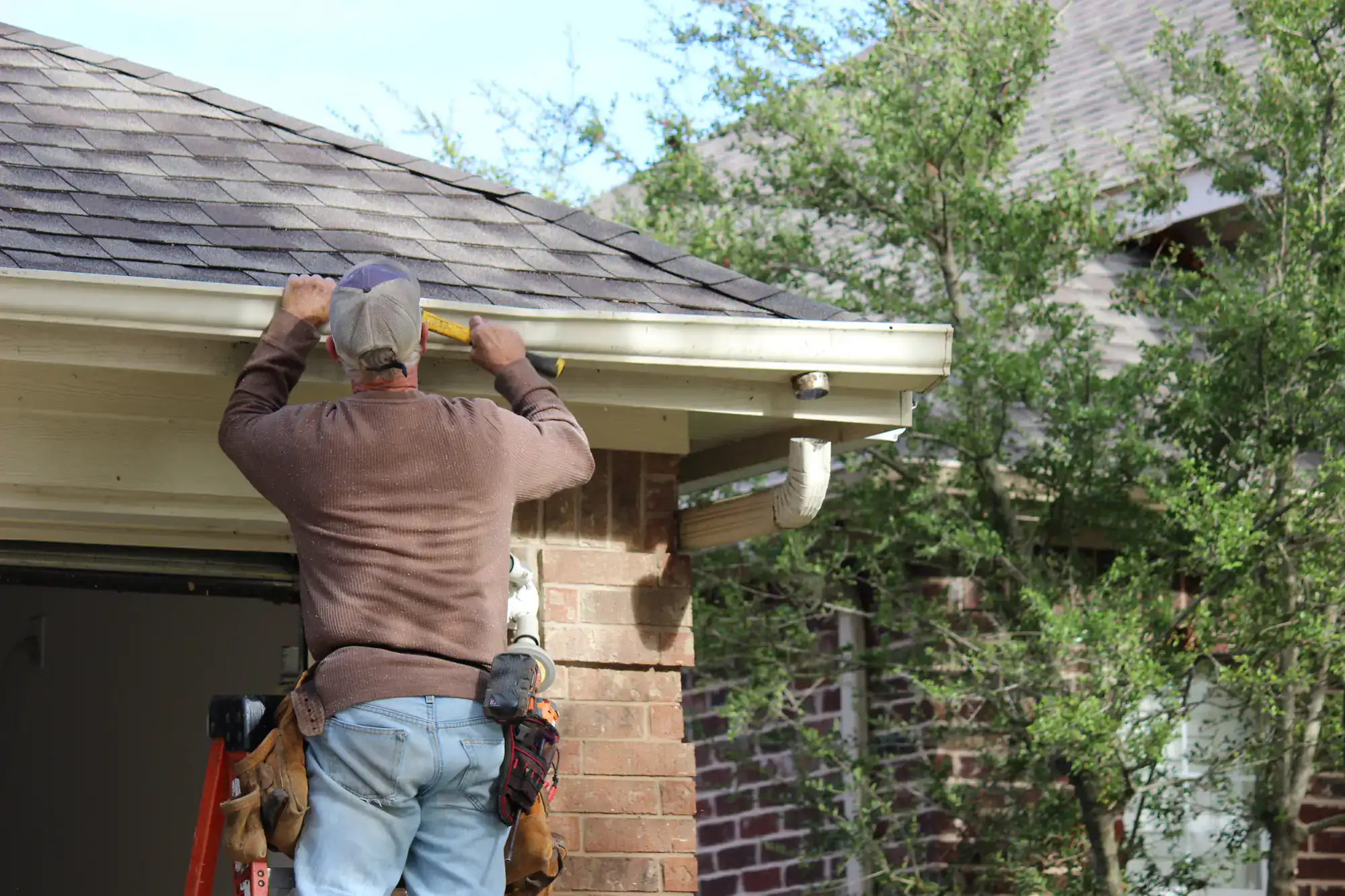
We inspect the full gutter system—not just the spot you called about. Leaking gutter joints often point to hanger failures three feet away. Sagging sections usually mean the fascia board behind it is rotting. We find the real problem, explain what’s happening in plain terms, and tell you what it’ll cost to fix it right.
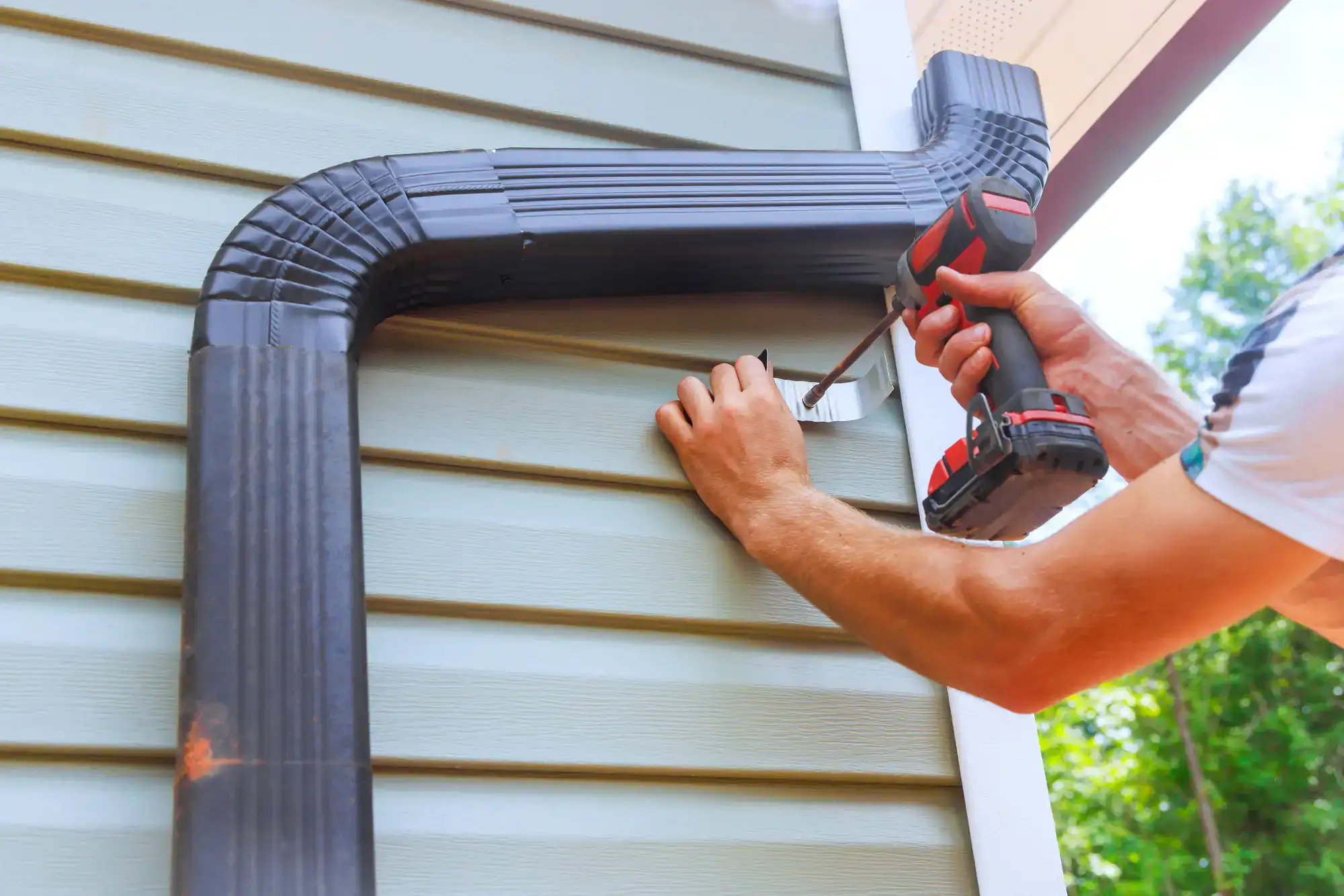
If it’s an emergency gutter repair situation—active leak, storm damage, water getting into your house—we handle temporary protection first, then schedule the permanent fix. If it’s a standard repair, we get it done in one visit whenever possible. We’re talking about gutter seam repair, reattaching loose downspouts, replacing corroded hangers, sealing leaks, fixing sagging sections, and addressing fascia damage before it spreads.
You get a clear timeline. You get the repair done by people who’ve done this thousands of times. And you get a warranty that actually means something, because we’ll still be here next year when you need us again.
Ready to get started?
Every gutter repair job in Wheatley Heights starts with understanding how Long Island’s coastal environment affects your specific setup. Salt air accelerates corrosion on aluminum and steel components. The sandy soil common in Suffolk County doesn’t absorb water like inland clay, so when gutters fail, foundation problems develop faster.
We handle gutter leak repair at seams and joints, fix sagging gutters by replacing failed hangers with corrosion-resistant hardware, repair or replace damaged fascia boards before water damage spreads, seal holes and cracks that let water through, reattach loose downspouts and ensure proper drainage away from your foundation, and address gutter flashing issues that let water behind your roofline.
If you’ve got storm damage from the kind of weather that dumped 10 inches of rain in August 2024, we know what to look for. Hail damage, wind-torn sections, debris impact—we’ve seen it all and fixed it all. Sometimes a $400 repair saves you from a $3,000 replacement. Sometimes the honest answer is that replacement makes more sense. We’ll tell you which situation you’re in, because our reputation in Wheatley Heights matters more than one sale.
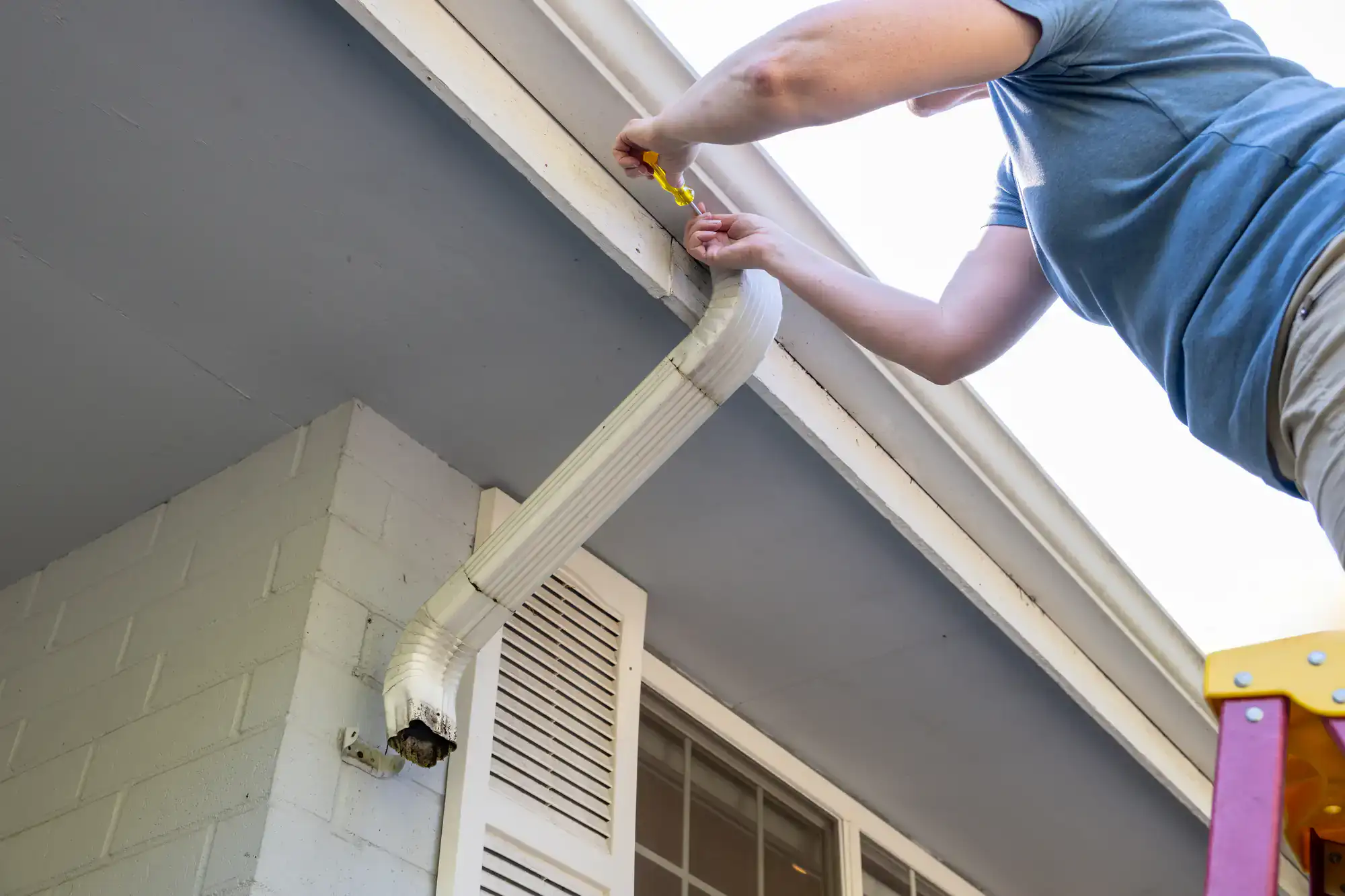
Most gutter repairs in Wheatley Heights run between $400 and $1,200 depending on what’s actually broken. A simple gutter leak repair at one seam might cost $200-$400. Fixing sagging gutters across one side of your house—replacing hangers, resealing joints, addressing minor fascia damage—usually falls in the $600-$900 range.
If you’re dealing with storm damage that’s affected multiple sections, or if the fascia boards behind your gutters have rotted and need replacement, you’re looking at the higher end of that range or beyond. The cost to fix sagging gutters increases significantly when the wood structure they’re attached to has failed.
Here’s what drives the price: linear feet of gutter affected, whether fascia or soffit needs repair, how many hangers need replacing, accessibility (second story costs more than first), and material type. We give you an exact quote after inspection—no surprises, no upselling. Sometimes we’ll tell you a repair doesn’t make financial sense and replacement is smarter. That’s part of the service.
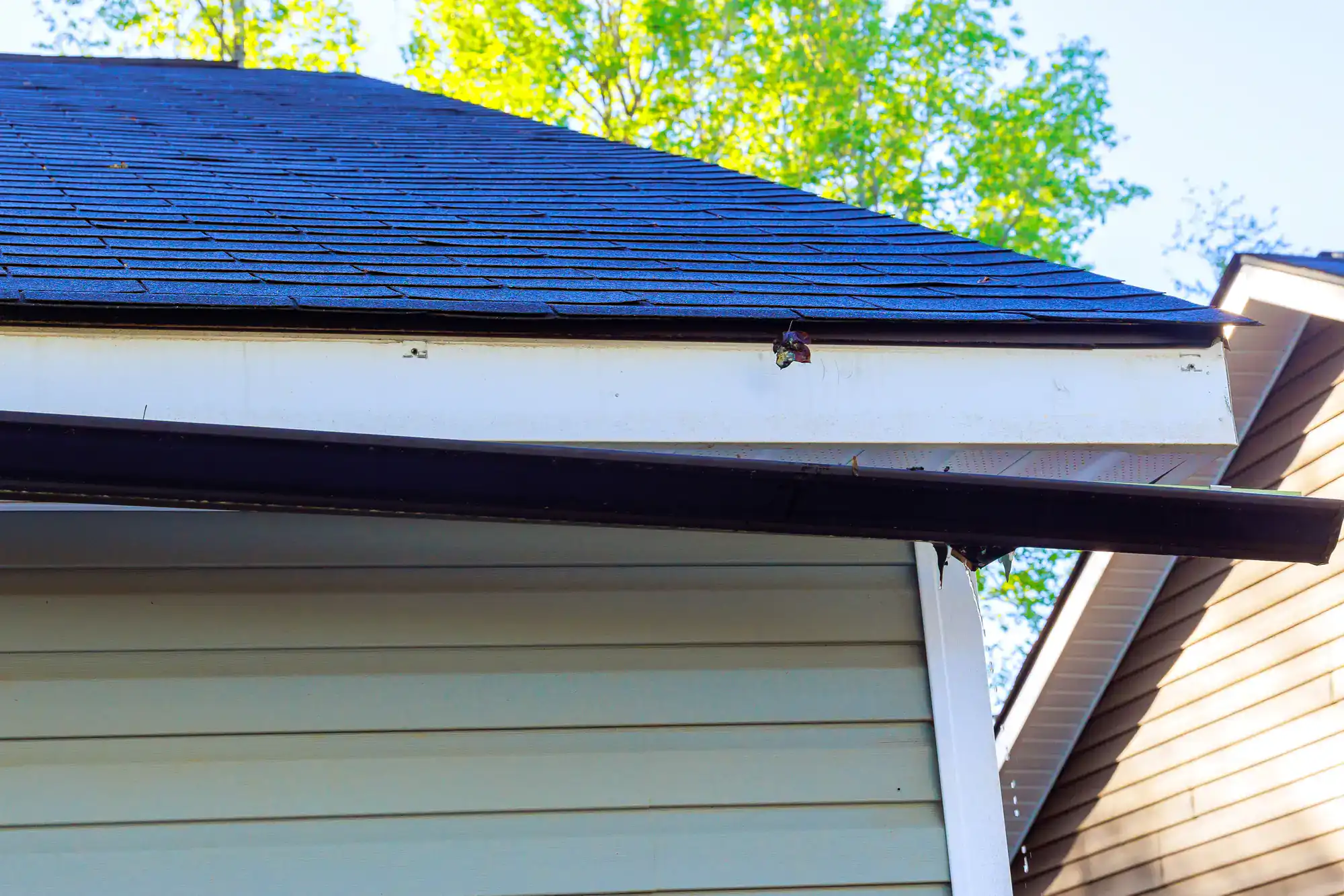
Gutter leaking at corners happens because that’s where two sections meet—and that joint is only as good as the sealant holding it together. Over time, temperature swings expand and contract the metal. Water sits in those seams during storms. Coastal salt air in Wheatley Heights accelerates deterioration of the sealant.
Eventually, the seal breaks down. Water finds the gap. What starts as a small drip becomes a steady stream during heavy rain, and that water is now pouring directly down your foundation wall instead of flowing through the downspout.
Leaking gutter joints also happen when hangers fail and sections start to sag. Even a slight slope change puts stress on seams that weren’t designed to flex. The fix involves resealing with quality sealant that holds up to Long Island weather, sometimes reinforcing the joint with additional fasteners, and addressing whatever caused the leak in the first place—whether that’s failed hangers, improper slope, or debris buildup that’s been forcing water against the seam. A proper gutter seam repair doesn’t just stop the current leak; it prevents the same failure from happening again next season.
Most sagging gutters can be repaired if you catch them before the fascia board behind them rots out. The sag happens because the hangers—the hardware that attaches your gutter to the house—have failed. Sometimes it’s just a few hangers. Sometimes it’s all of them, especially on older installations where coastal conditions have corroded the fasteners.
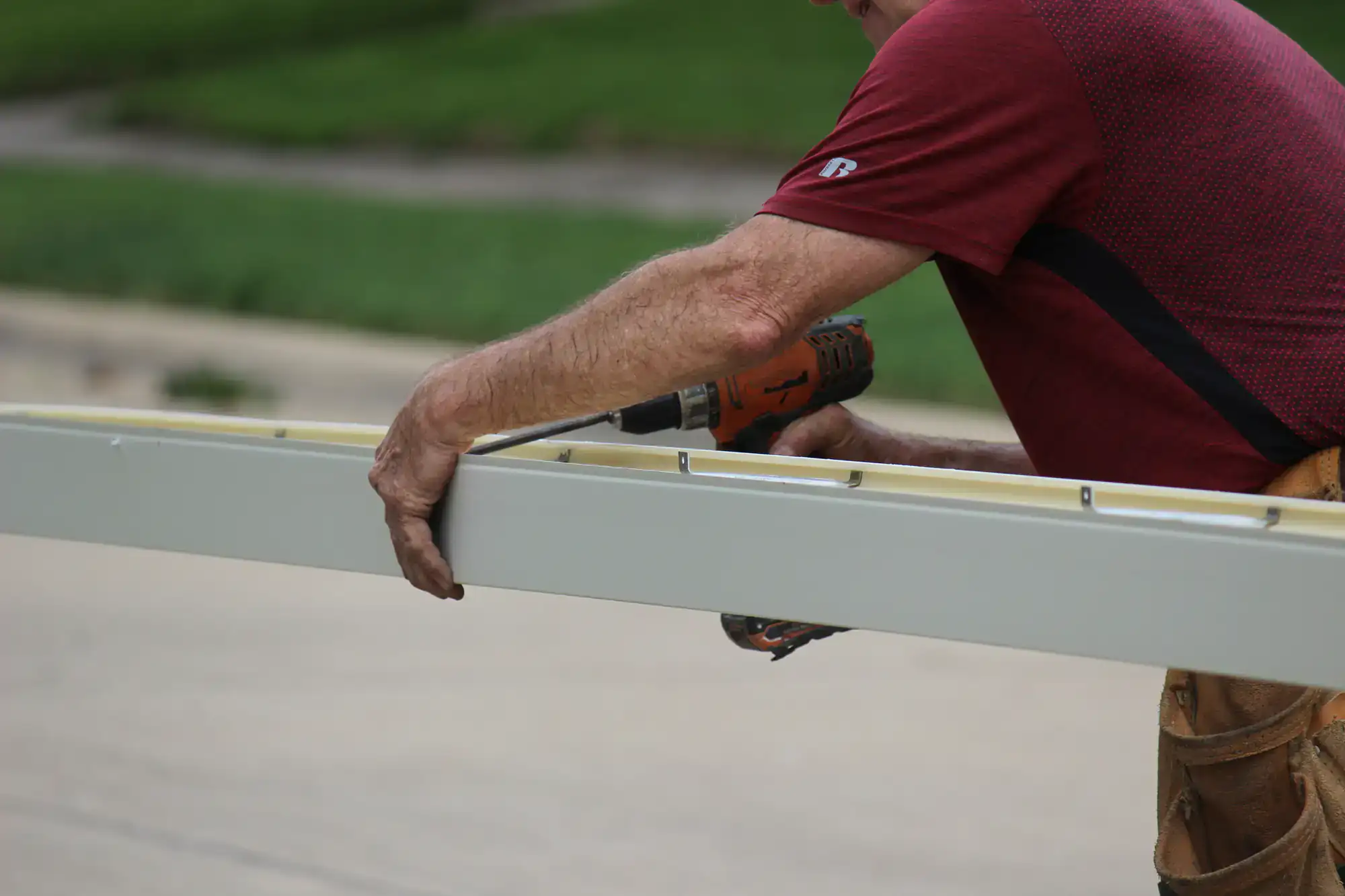
We remove the failed hangers, inspect the fascia board for water damage or rot, replace any compromised wood, then reinstall the gutter section with new corrosion-resistant hangers spaced properly to handle Suffolk County’s heavy rain and snow loads. If the gutter itself is still structurally sound—no major rust, holes, or cracks—repair makes perfect sense and costs a fraction of full replacement.
But if the sagging has been going on long enough that water’s been sitting in that low spot for months, you might have rust-through or fascia damage that’s spread. At that point, we’re honest about when repair stops making financial sense. A $300 repair that buys you another 6-8 years is smart. A $600 repair on gutters that’ll need replacing in two years anyway isn’t. We walk you through both options and let you decide.
Yes, because water damage doesn’t wait for business hours. When a storm tears a section of gutter loose, or a leak is actively pouring water into your basement, or a downspout has detached and is flooding your foundation, that needs addressing immediately.
We handle emergency gutter service for Wheatley Heights homeowners dealing with active damage. That might mean temporary repairs to stop water intrusion until we can schedule the permanent fix, or it might mean same-day repair if we can get there and the damage is straightforward.
Storm damage gutter repair after events like the August 2024 flooding that hit Suffolk County often involves multiple issues—wind damage, debris impact, overwhelmed systems that failed under volume. We’ve handled emergency calls after Hurricane Sandy and every major nor’easter since. We know what Long Island storms do to gutter systems, and we know how to stabilize the situation fast. The goal is stopping additional damage to your home while we line up the proper repair. Even a basic temporary fix can prevent thousands in water damage while you’re waiting for the full repair appointment.
Here’s the straightforward answer: if the gutter material itself is failing—rusted through, cracked, corroded beyond a few isolated spots—replacement makes more sense. If the problem is with how it’s attached, how it’s sealed, or damage to specific sections, repair is usually the smarter move.
Look for rust holes that are spreading, not just surface rust. Check if the gutter is pulling away from the fascia in multiple locations. Notice if you’ve got leaks at several seams, not just one corner. Pay attention to whether water is getting behind the gutter and damaging the fascia or soffit. These are signs the system might be at the end of its functional life.
But if you’ve got a few problem spots—a leaking corner, one sagging section, a detached downspout—those are repair situations. Seamless gutter repair on a system that’s otherwise sound can give you another decade of protection for a fraction of replacement cost. We’ll inspect the full system, show you exactly what’s happening, and give you honest guidance about repair versus replacement. Our job isn’t to sell you the most expensive option. Our job is to protect your home in the most cost-effective way that actually works long-term. Sometimes that’s a $400 repair. Sometimes it’s a $2,800 replacement. We’ll tell you which one you’re looking at and why.
Gutter and fascia repair go together more often than most homeowners realize. Your gutters attach to the fascia board—the wooden trim that runs along your roofline. When gutters leak, sag, or overflow, water runs down that fascia. In Wheatley Heights’ coastal climate, that moisture accelerates wood rot.
We see this constantly: homeowner calls about a sagging gutter, and when we inspect it, the fascia behind that section is soft or rotted. You can’t just reattach the gutter to compromised wood—it’ll fail again in months. The proper fix involves removing the affected gutter section, cutting out the rotted fascia, installing new pressure-treated or composite fascia board, then reinstalling or replacing the gutter with proper fasteners into solid wood.
Fascia board replacement isn’t always necessary, but when it is, addressing it during gutter repair prevents much bigger problems down the road. Rotted fascia lets water reach the roof decking and rafters. That’s when a $600 gutter and fascia repair becomes a $5,000 structural issue. We inspect the fascia as part of every gutter repair job because catching wood damage early is part of protecting your investment. You’ll know exactly what condition your fascia is in and what needs addressing—before it becomes an emergency.
Other Services we provide in Wheatley Heights