
Hear from Our Customers

Suffolk County’s location creates brutal conditions for roofs. You’re dealing with nor’easters that dump 9 inches of rain in 24 hours, salt air that accelerates deterioration, and temperature swings that crack inferior materials. Your roof isn’t just keeping rain out—it’s your first defense against flooding risk that affects 25% of properties here over the next 30 years.
A properly installed roof in New Suffolk means you’re not paying emergency rates when the next storm hits. You’re not competing with hundreds of other homeowners for limited contractor availability. You’re not dealing with water damage, mold remediation, and temporary housing costs that run 2-3 times normal rates.
The right residential roof installation adds $12,000-$14,000 to your home value while cutting energy costs up to 25%. You get wind ratings up to 130 mph, algae resistance for coastal performance, and insurance premium reductions. Most importantly, you get peace of mind when weather forecasts turn ugly.
We’ve spent 35+ years learning what works in this specific climate. We’re a family-owned operation, which means every roof installation in New Suffolk gets personal oversight—not a rotating crew you’ll never see again.
We’ve been through 45 hurricanes since we started serving this area. We know which materials hold up to salt air and which ones fail within five years. We understand that your median home value of $649,874 deserves protection that matches the investment, and that your 53-year-old home likely needs more than a basic tear-off and reshingle.
You’re not getting a sales pitch from us. You’re getting straight answers about what your roof actually needs, what it’ll cost, and how long it’ll last in New Suffolk’s weather.

We start with a thorough inspection of your current roof and attic. We’re looking for hidden damage that most homeowners miss—loosened flashing, compromised decking, inadequate ventilation. You get a detailed assessment, not a pressure sale.
If you move forward, we handle permits and paperwork. Then we protect your property with tarps and ground protection before removal starts. The tear-off reveals what’s really happening with your roof deck—rot, water damage, structural issues that need addressing before new materials go on.
Installation follows strict coastal protocols. Multiple waterproof barriers, integrated flashing systems, proper fastener placement for wind resistance. We’re using materials rated for Long Island weather—whether that’s asphalt shingle roof installation, metal roof installation, or standing seam metal roof systems.
Every roof gets proper ventilation installation to prevent moisture buildup and extend material life. Ridge cap installation, drip edge installation, and underlayment installation all follow manufacturer specs so your warranty actually means something. Final inspection covers every detail before we clean up and walk the property with you.

Ready to get started?
You’re getting materials chosen specifically for Suffolk County conditions. That means wind-resistant shingles for nor’easters, algae-resistant options for humid summers, and proper ice and water shield for the 25-40 inches of snow you get here. We stock cedar roof installation materials, EPDM roofing installation supplies, flat roof installation systems, rubber roof installation products, and slate roof installation materials depending on your home’s needs.
Commercial roof installation in New Suffolk follows the same coastal-rated standards. Flat roofs get EPDM or rubber roofing systems designed for ponding water and temperature extremes. Our metal roof installers handle steel roof installation and tin roof installation for both residential and commercial properties.
Every installation includes proper roof flashing installation around chimneys, valleys, and penetrations—the spots where most leaks start. Roof ventilation installation prevents the moisture problems that cut roof life in half. If you’re adding skylights, skylight installation gets the same attention to waterproofing and structural integrity.
You’re also getting a crew that shows up on time, completes work in the timeline we commit to, and cleans up daily. No tarps left flapping for weeks. No nails in your driveway. No runaround when you have questions.
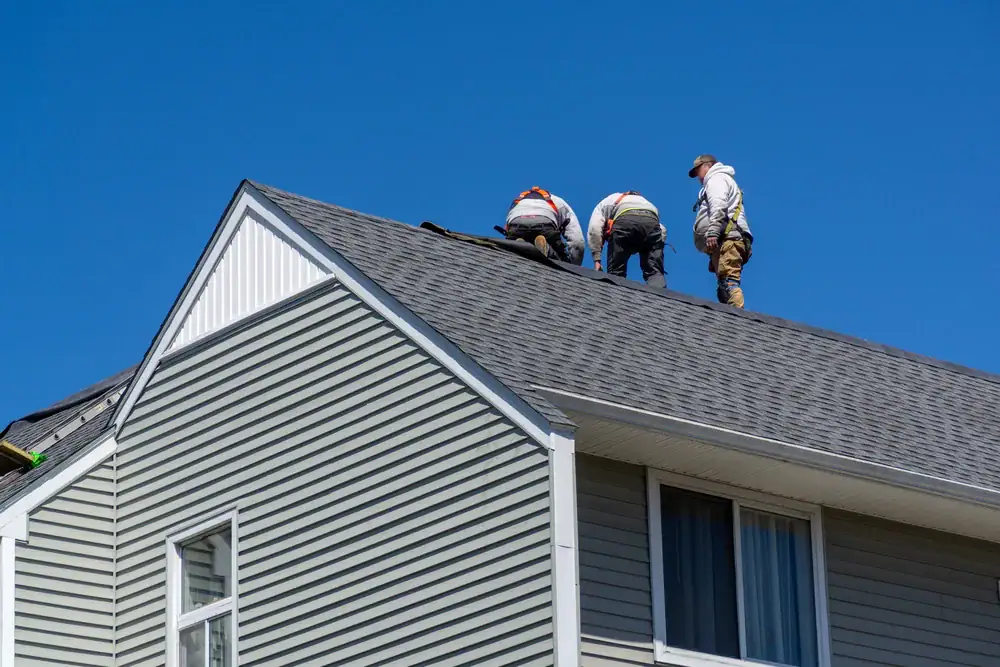
Most residential roof installations in New Suffolk take 2-4 days depending on size, complexity, and weather. A straightforward asphalt shingle roof on a 1,800 square foot home usually wraps up in 2-3 days. More complex jobs—metal roof installation, slate roof installation, or homes with multiple valleys and penetrations—can take 4-5 days.
Weather delays happen here. We don’t install in rain or high winds because it compromises the waterproofing layers. If a storm rolls in mid-project, we secure everything with tarps and resume when conditions allow.
The timeline also depends on what we find during tear-off. If your decking has rot or structural damage, we’re adding time to replace those sections properly. Rushing that work to meet an arbitrary deadline just means you’ll have problems later. We give you realistic timelines upfront and update you immediately if anything changes.
Asphalt shingles with high wind ratings (Class H or Class F) perform well in New Suffolk if they’re installed correctly. You want algae-resistant shingles rated for coastal environments—standard shingles develop black streaks within a few years from the humidity and salt air. Architectural shingles with 130 mph wind ratings handle nor’easters better than basic three-tab options.
Metal roofing outlasts everything else in coastal conditions. Standing seam metal roof systems handle salt air, temperature swings, and heavy snow loads without the deterioration you see with other materials. Steel roof installation costs more upfront but you’re looking at 50+ year lifespan versus 20-25 for asphalt.
Cedar roof installation appeals to homeowners wanting that classic look, but it requires more maintenance in this climate. Slate roof installation offers incredible durability and storm resistance, though the weight requires structural evaluation first. For flat or low-slope sections, EPDM roofing installation or rubber roof installation systems handle ponding water better than modified bitumen.
The material matters less than proper installation. The best shingle fails if the underlayment, flashing, and ventilation aren’t done right for coastal conditions.
Roof installation in New Suffolk typically runs $5,000-$15,000 for residential projects, though that range shifts based on size, materials, and complexity. A basic asphalt shingle roof installation on a 1,500 square foot ranch sits around $8,000-$12,000. Larger homes, multiple stories, or steep pitches increase costs due to safety equipment and labor time.
Metal roof installation costs more—usually $15,000-$25,000 for the same size home—but you’re getting 50+ year lifespan and better storm performance. Cedar roof installation, slate roof installation, and specialty materials push costs higher but offer specific benefits some homeowners want.
Commercial roof installation pricing depends entirely on building size and roof type. Flat roof installation with EPDM roofing runs $4-$8 per square foot installed. Standing seam metal roof systems for commercial buildings cost more but handle snow loads and drainage better.
The real cost consideration is what happens if you don’t replace an aging roof. Emergency repairs during storms run 2-3 times normal rates. Water damage, mold remediation, and ruined belongings add thousands more. A new roof installation costs less than dealing with those consequences, and you get the 60-70% ROI when you sell.
Yes, roof installation in New Suffolk requires building permits from the Town of Southold. The permit process ensures your new roof meets current building codes for wind resistance, fire rating, and structural load—important considerations given the coastal storm exposure here.
We handle the permit application and paperwork as part of our roof installation services. That includes submitting plans, coordinating inspections, and ensuring everything passes code review. The permit cost typically runs $200-$500 depending on project scope, and it’s worth every penny for the protection it provides.
Some homeowners try to skip permits to save money or time. That’s a mistake. Unpermitted work can void your homeowner’s insurance, create problems when you sell, and leave you liable if something fails. Insurance companies specifically check for proper permits when processing storm damage claims.
The inspection process also catches issues that protect you long-term. Inspectors verify proper flashing installation, adequate ventilation, and correct fastener placement—the details that determine whether your roof survives the next major storm or becomes an insurance claim.
If your roof is over 20 years old or showing visible wear, replacing it before listing makes financial sense in New Suffolk’s market. Buyers here specifically look for homes without major repair surprises. A roof that’s clearly near end-of-life becomes a negotiation point that costs you more than the replacement would have.
New roof installation returns 60-70% of the cost in added home value. On a $20,000 roof, you’re adding $12,000-$14,000 to your sale price. More importantly, you’re expanding your buyer pool. Many buyers can’t or won’t take on a major roof replacement right after closing—they’ll simply look at other properties instead.
The Suffolk County market is competitive, with median home prices at $649,874 and climbing. Homes with newer roofs sell faster and get fewer inspection objections. You’re also avoiding the situation where buyers demand a $25,000 credit for a roof that would cost you $18,000 to replace yourself.
Timing matters. If you’re listing in spring or summer, get the roof done in fall or winter when we have more availability and sometimes better pricing. If your roof is under 15 years old and in decent shape, you might be fine with just a pre-listing inspection and minor repairs instead of full replacement.
You need replacement rather than repairs when damage covers more than 25-30% of your roof, when the roof is over 20 years old, or when you’re seeing multiple leak points. Isolated damage from a fallen branch can be repaired. Widespread granule loss, curling shingles, and multiple areas of deterioration mean the entire system is failing.
Check your attic after heavy rain. If you’re seeing water stains in multiple locations, daylight through the roof deck, or sagging areas, you’re past the repair stage. One or two small leaks might be fixable with targeted flashing repair and shingle replacement. Systemic problems require full roof installation.
Age matters more in coastal climates like New Suffolk. Salt air and temperature extremes age roofs faster than inland areas. A 15-year-old roof here might show wear that would take 20 years elsewhere. If your roof is approaching 20 years and you’re starting to see issues, replacement makes more sense than throwing money at repairs that buy you another year or two.
The honest answer comes from a thorough inspection by someone who’s not trying to upsell you. We’ll tell you if repairs will actually solve your problem or if you’re just delaying the inevitable. Sometimes strategic repairs buy you time to budget for replacement. Sometimes they’re wasted money on a roof that needs to come off anyway.
Other Services we provide in New Suffolk