
Hear from Our Customers
You stop worrying about water pooling near your foundation. You stop seeing streaks down your siding after every storm. And you stop dealing with that slow rot happening behind your fascia boards—the kind most homeowners don’t notice until paint starts peeling near the roofline.
When your gutters channel water correctly, your landscaping stays intact. Your basement stays dry. And you’re not paying for foundation repairs that could’ve been avoided with a $600 gutter fix.
The biggest issue isn’t the fall leaf drop. It’s what happens when wet debris sits in your gutters through November, December, and January. By late February, that constant coastal humidity keeps everything damp. That’s when fascia boards rot out and water gets behind your siding—long before you realize there’s a problem.
We’ve been handling exterior work across Suffolk County since 2023, and we’re fully licensed and insured for gutter repair in Shelter Island, NY. That matters because you’re not liable if something goes wrong on the job site—and because we know what nor’easters and freeze-thaw cycles do to gutter systems out here.
We understand ferry schedules. We work with seasonal homeowners. And we’ve seen what happens when gutters fail on properties worth $650,000 or more—which is the median home value in this area.
You’re not hiring a crew that’s guessing. You’re hiring people who’ve repaired leaking gutter joints, reattached downspouts, and replaced rotted fascia boards on homes just like yours.
First, we inspect your entire gutter system—not just the spot that’s leaking. We check for sagging sections, loose hangers, separated seams, clogged downspouts, and fascia damage. Most gutter problems aren’t isolated. If one corner is leaking, there’s usually something else going on.
Then we walk you through what needs fixing and what it’ll cost. No surprises. If your fascia board is rotted, we tell you. If your downspout is dumping water too close to your foundation, we show you. If you’ve got a hole rusting through, we explain whether it’s worth sealing or replacing that section.
Once you approve the work, we handle it—usually within a few days depending on weather and our schedule. We can work around ferry times if you’re coming from the mainland. And if it’s an emergency after a storm, we do same-day or next-day service when conditions allow.
After the repair, your gutters do what they’re supposed to: move water away from your house. No pooling. No overflow. No slow damage eating away at your siding and foundation.
Ready to get started?
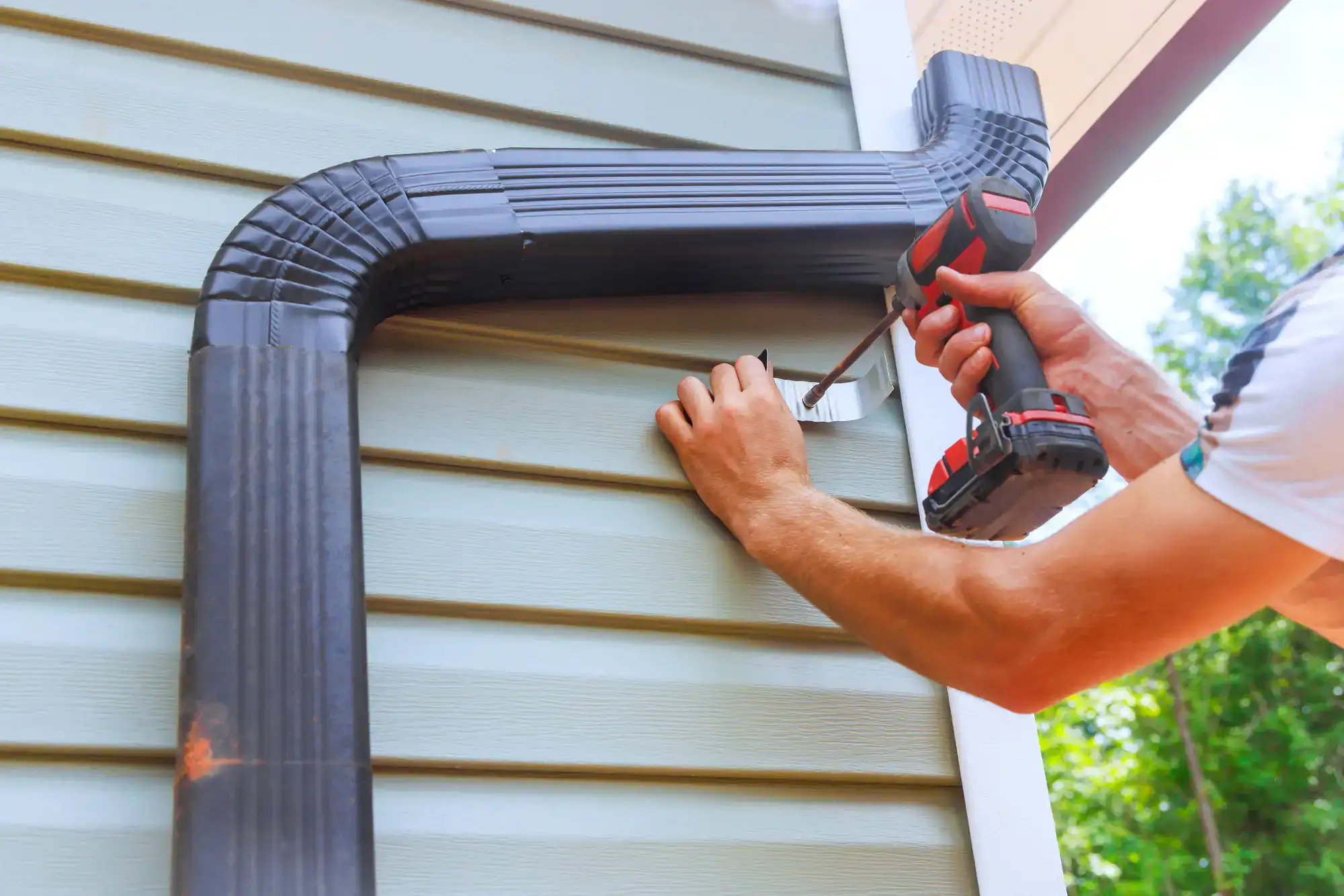
We fix gutter leaks at seams and corners—the spots where water sneaks through and runs down your siding. We reattach sagging gutters that are pulling away from your roofline. We seal holes before they turn into full section replacements. And we fix or replace downspouts that aren’t draining properly.
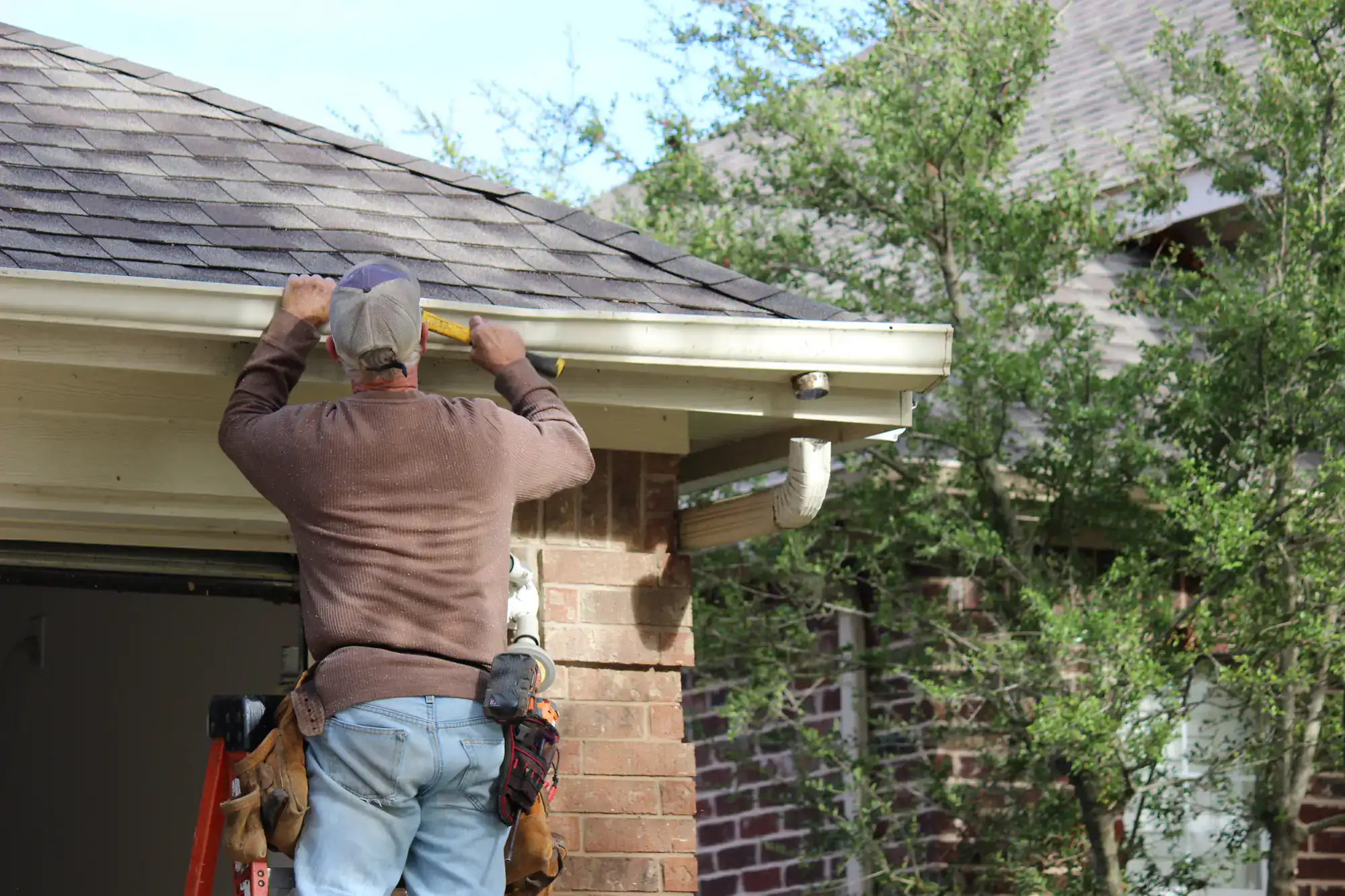
If your fascia board is damaged—which happens a lot when gutters overflow for months—we handle that too. Fascia board replacement isn’t just cosmetic. It’s structural. That board supports your gutter system, and if it’s rotted, your gutters won’t stay attached no matter how many times you rehang them.
We also address issues specific to Shelter Island homes. Coastal storms dump heavy rain fast, and if your gutters can’t handle the volume, you’ll see water pouring over the sides. Ice dams form when gutters clog and snow melts unevenly. And that constant humidity from living near the water accelerates rust and rot faster than it would inland.
You’re not paying for a temporary patch. You’re paying to stop the damage and keep your home protected through the next storm season.
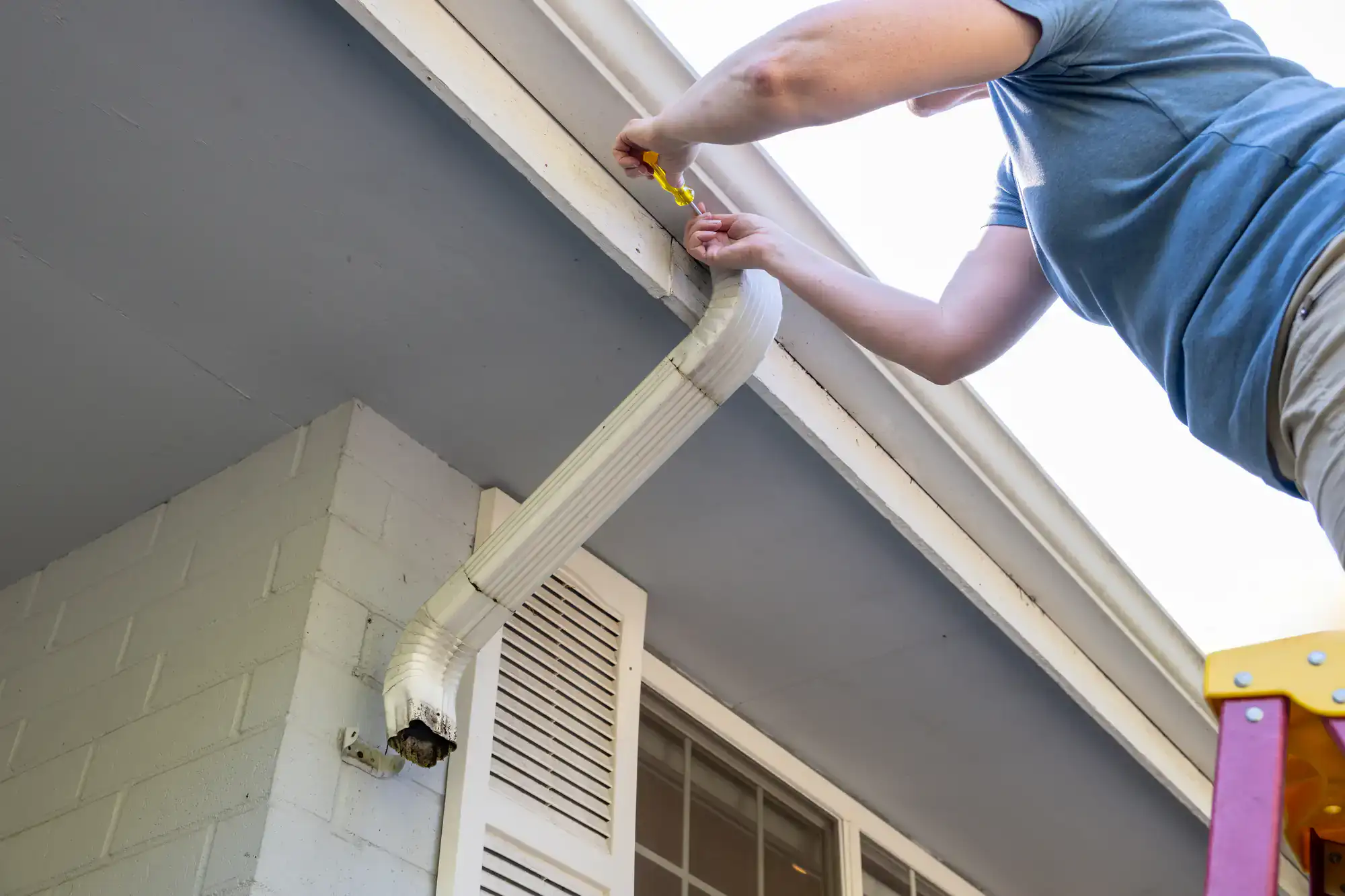
Most gutter repairs in this area run between $400 and $900, depending on what’s broken and how much of your system needs attention. Sealing a leaking seam costs less than replacing a rotted fascia board and rehanging an entire section of gutter.
If you’re just fixing a small leak or reattaching a downspout, you’re looking at the lower end. If you’ve got multiple problems—sagging gutters, fascia damage, and clogged downspouts—it adds up. But it’s still cheaper than fixing foundation cracks or replacing water-damaged siding.
We give you a clear estimate after the inspection. No hidden fees. And if you’re comparing prices, make sure the other company is licensed and insured. The cheapest bid usually means someone’s cutting corners—either on materials, labor, or coverage if something goes wrong.
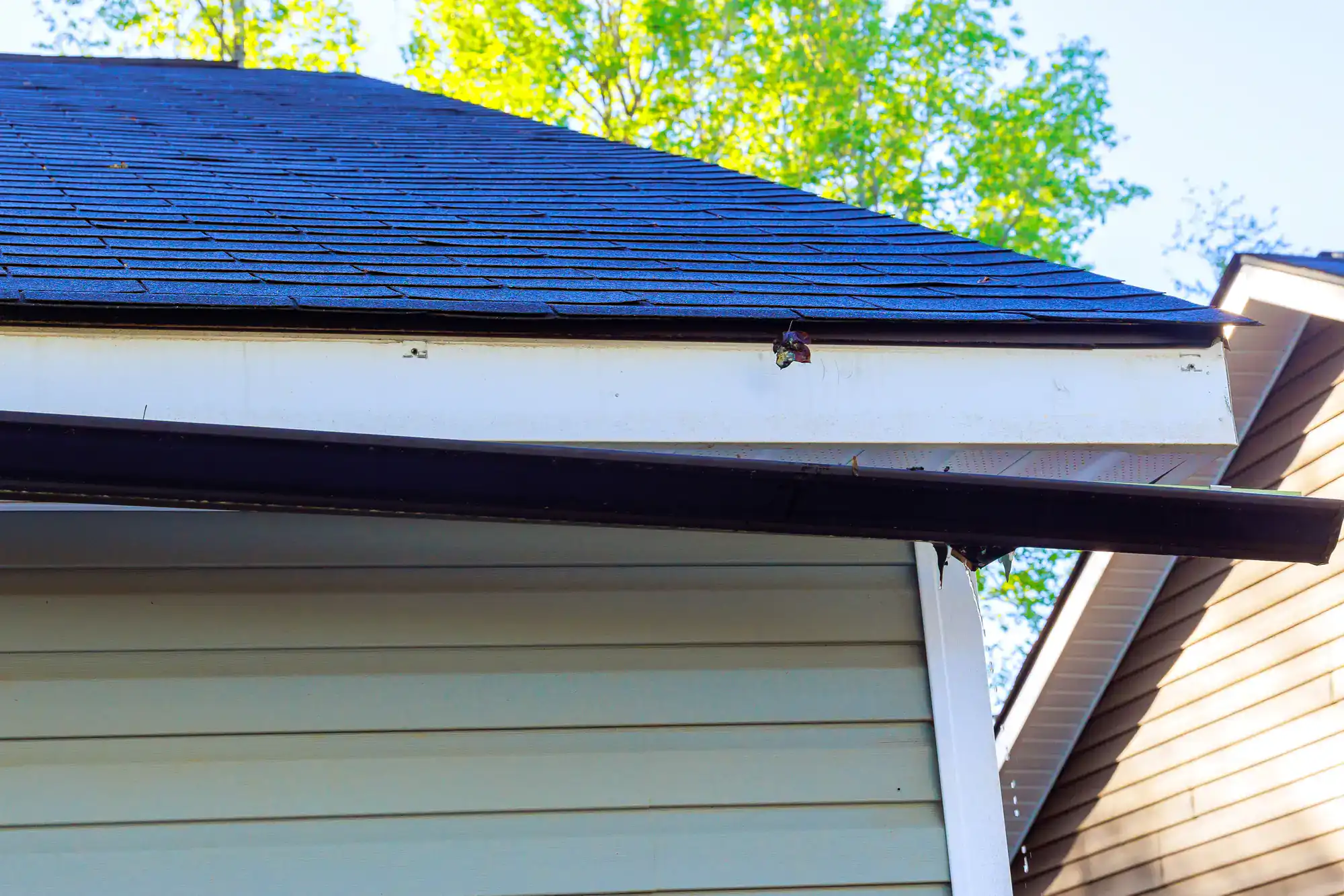
Corner leaks happen when the sealant breaks down or the joint separates. Gutters expand and contract with temperature changes, and out here on Shelter Island, you’re dealing with freezing winters and humid summers. That constant movement weakens the seams over time.
If your gutters are clogged, water sits in the corners instead of draining. That standing water accelerates the breakdown—especially when it freezes and thaws repeatedly. Eventually, the sealant cracks or the metal pulls apart, and you’ve got water running down the side of your house.
The fix is resealing the joint or, if the corner piece is damaged, replacing that section. It’s not complicated, but it needs to be done right. A bad seal just buys you a few months before it leaks again.
If the wood feels soft when you press on it, it’s rotted. If you see paint peeling or bubbling near your roofline, water’s getting behind it. And if your gutters are sagging even after you’ve reattached them, the fascia board probably can’t hold the weight anymore.
Fascia board damage usually happens because gutters overflowed for too long. Water runs down the back of the gutter and soaks into the wood. In Shelter Island’s humid climate, that wood stays damp and rots faster than it would in a drier area.
Replacing fascia board isn’t optional if it’s rotted. Your gutters attach to that board, and if it’s compromised, your gutter system won’t stay secure. We remove the damaged section, install new wood, and make sure it’s properly sealed before rehanging your gutters.
Yes. Most of the time, sagging gutters just need new hangers or better spacing. Gutters sag when the hangers fail or when they’re spaced too far apart to support the weight of water and debris.
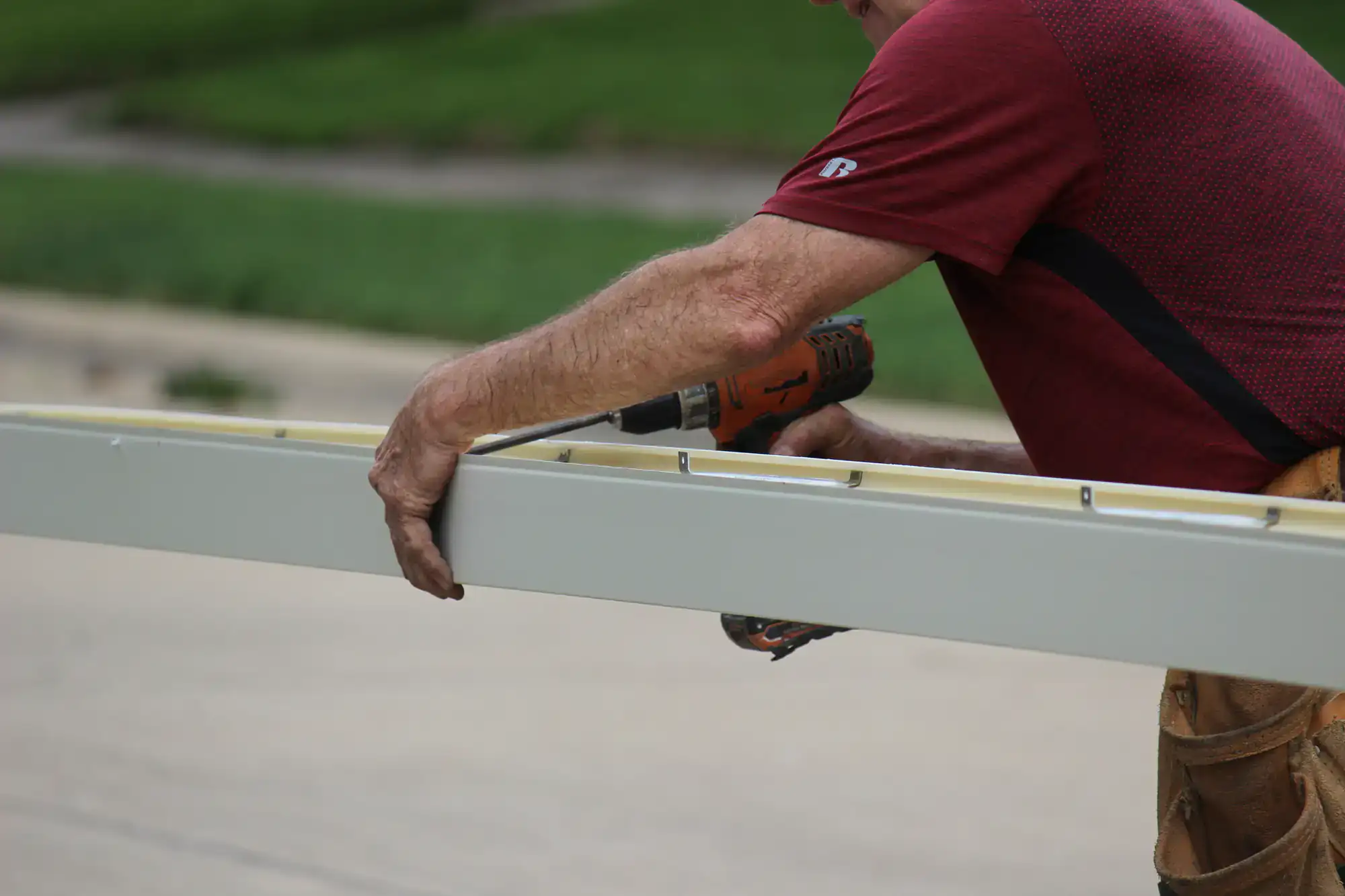
We remove the old hangers, check the fascia board for damage, and install new hangers at the right intervals—usually every two feet. If the gutter itself is bent or damaged, we might need to replace that section, but the rest of the system can stay.
Sagging gutters don’t drain properly. Water pools in the low spots, which makes the problem worse. The longer you wait, the more likely you’ll end up with fascia damage or separated seams. Fixing it early saves you money.
Yes. We offer same-day or next-day emergency service when weather and scheduling allow. After a nor’easter or heavy storm, we know gutters take a beating—especially if they were already compromised.
If your gutter ripped off the house, if a downspout detached and water’s pouring next to your foundation, or if you’ve got a major leak flooding your basement, call us. We’ll get someone out as fast as we can.
We’re familiar with ferry schedules and island logistics, so we plan around that. And there’s no extra charge for emergency service—you’re paying for the repair, not a premium for urgency. We just want to stop the damage before it gets worse.
At least twice a year—once in late fall after the leaves drop, and once in early spring after winter weather. If you’ve got a lot of trees near your house, you might need more frequent checks.
Shelter Island’s weather is tough on gutters. You’ve got heavy rain from coastal storms, freeze-thaw cycles that crack seals and joints, and constant humidity that accelerates rust and rot. Catching small problems early—like a loose hanger or a minor leak—keeps you from dealing with expensive fascia board replacement or foundation repairs later.
If you’re a seasonal resident, schedule an inspection before you leave for the winter and another when you return. Gutters don’t fix themselves, and damage gets worse fast when no one’s around to notice it.
Other Services we provide in Shelter Island